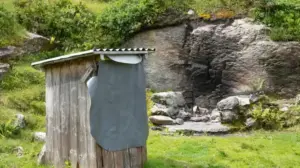
Quick answer: a pop up shower for camping is a quick, portable privacy shelter that gives you a place to wash, rinse, or change at camp. It is best for campers who want a simple private space and do not want to rig a permanent shower setup. It is not the same thing as a powered shower system, and that trade-off matters.
Key takeaways
- A pop up camping shower is mainly a privacy tent, not a water source by itself.
- The right setup depends on how you carry water, where you camp, and how much privacy you need.
- A basic shower shelter is easy to use, but it can be cramped and flimsy in wind.
- Good drainage and soap control matter more than fancy features.
- If you want hot water, pressure, or a full wash station, a pop up shower alone is not enough.
What is a pop up shower for camping?
A pop up shower for camping is a lightweight shelter that opens fast and gives you a private place to wash. Most are used with a bucket, solar shower bag, pump sprayer, or portable shower hose, so the tent itself is only one part of the setup.
The point is privacy. A decent pop up camping shower keeps clothes dry, blocks sight lines, and creates a small enclosed space for washing up after a hike, beach day, or dusty camp drive. Many people also use it as a changing room, toilet tent, or place to hang wet gear.
This is the part many beginners miss: the tent does not make water hot, pressurized, or clean. A simple model may only have a fabric shell, a door, and a few mesh vents. If you want a real shower feel, you still need to bring the water, the spray method, and a way to manage runoff.
Therefore, a pop up shower is a good fit when you want speed and privacy more than luxury. It is a weak choice if you camp in strong wind, need a lot of elbow room, or want to shower several people in a row. In those cases, a sturdier shelter or a more complete shower system makes more sense. For comparison, see What features matter most?.
Who needs one, and who does not?
A pop up shower for camping is a good buy for car campers, festival campers, families, and anyone who wants a private wash space that takes only a minute or two to set up. It also helps if you camp with kids and want a place for towel changes without turning the whole site into a mess.
It is less useful for backpackers, solo travelers packing light, and people who already shower at campgrounds with built-in facilities. If your pack space is measured in liters, not vehicle cargo room, even a small shelter may feel like too much. A 2-person tent is usually a better use of space than a separate shower room for those trips.
This is also not the right tool if your main need is water delivery. A pop up tent does not solve the problem of getting water to you, heating it, or pumping it through a nozzle. If your real goal is a rinse after swimming, a 5-gallon bucket with a spigot or a simple pump sprayer may be enough without adding another item to carry.
The trade-off is simple: you gain privacy and lose compactness. You gain a cleaner wash area and lose some speed in windy conditions. That makes the tent a convenience item, not a must-have for every camper. If you want a smaller kit, start with How do you set up a pop up camping shower? and keep the setup minimal.
How do you set up a pop up camping shower?
You set up a pop up camping shower by choosing level ground, opening the shelter, anchoring it, and placing your water source inside or just outside the door. The goal is a private, stable space with enough room to stand, turn, and keep your towel dry.
Here is the basic procedure:
-
Pick a flat spot with drainage. Find ground that is level and not prone to pooling water. A 1- to 2-inch puddle under the floor or at the entrance can turn the space muddy fast.
-
Unfold the shelter fully. Let the frame pop open until the fabric panels are taut. A half-open shelter usually twists in the wind and makes the door harder to use.
-
Stake or weight the corners. Use the stakes that came with the tent, or add sandbags, rocks, or gear bags if the ground is hard. A shower tent without anchors can shift when you push the door open.
-
Orient the door away from wind. Turn the entrance so gusts do not blow straight into the opening. That helps keep water spray and loose fabric under control.
-
Place the water source in the right spot. Set the bucket, pump sprayer, or shower hose where it reaches your shoulders without crowding your feet. If the hose is too short, you will end up twisting and bumping into the sidewalls.
-
Lay down a mat or towel if needed. A simple mat keeps bare feet off wet dirt and gives you a cleaner place to stand. Even a small 18-inch by 24-inch mat can make the floor easier to manage.
-
Check the exit path before you start. Keep your towel, soap, and dry clothes within arm’s reach but outside the spray zone. That avoids the most annoying part of showering in camp: getting clean and then stepping into a pile of wet gear.
A good setup takes only a few minutes once you know where the shelter sits best. The biggest mistake is rushing the anchor step. A shower tent that is not tied down feels fine in calm air, then becomes a loose sail when the wind changes.
What features matter most?
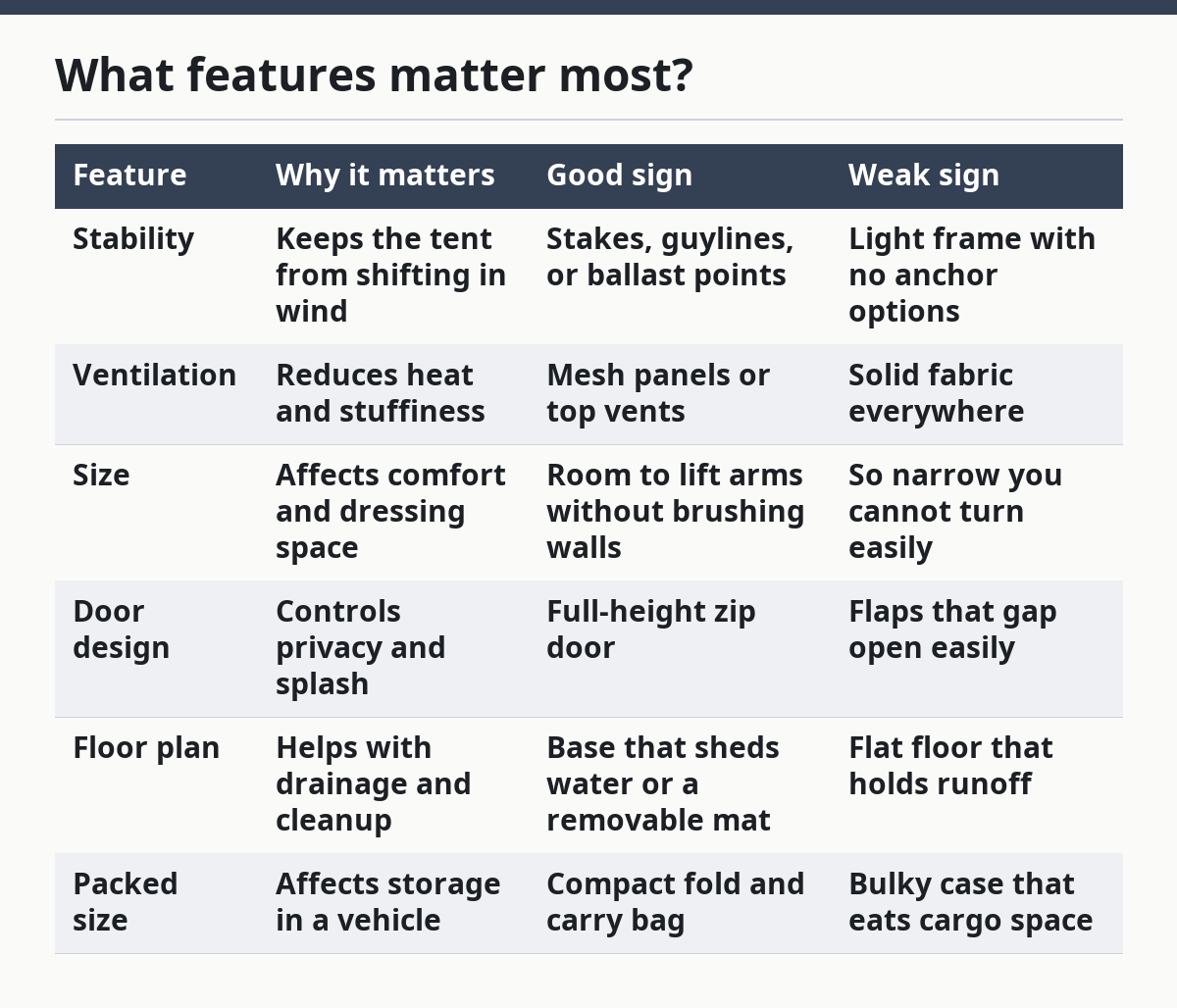
The most useful features are stability, ventilation, size, and easy entry. Fancy pockets and extra zippers matter far less than a shelter that stays upright and does not trap heat and moisture.
| Feature | Why it matters | Good sign | Weak sign |
|---|---|---|---|
| Stability | Keeps the tent from shifting in wind | Stakes, guylines, or ballast points | Light frame with no anchor options |
| Ventilation | Reduces heat and stuffiness | Mesh panels or top vents | Solid fabric everywhere |
| Size | Affects comfort and dressing space | Room to lift arms without brushing walls | So narrow you cannot turn easily |
| Door design | Controls privacy and splash | Full-height zip door | Flaps that gap open easily |
| Floor plan | Helps with drainage and cleanup | Base that sheds water or a removable mat | Flat floor that holds runoff |
| Packed size | Affects storage in a vehicle | Compact fold and carry bag | Bulky case that eats cargo space |
The right size depends on how you will use it. A single person can live with a tight booth if the goal is a fast rinse. A family camper usually needs more head room and a wider door because someone will be helping a child, passing in towels, or changing inside.
Ventilation is easy to overlook. A sealed shelter may feel private, but it also gets hot and damp fast, especially in summer. Mesh vents and a high door opening help the space dry faster after use. That matters even more if you are using the tent for two jobs, like showering and changing.
If you are comparing models, a plain shelter is often enough for weekend camping. If you want a full wash station with better water control, then a larger setup with a shower line, a floor mat, and a stronger frame is worth the extra bulk. For a broader gear list, What should I buy instead if I need more than privacy? is the next stop.
What can go wrong with a pop up shower?
A pop up shower for camping can tip, leak, smell musty, or become awkward to use if the site and setup are wrong. Most problems come from wind, poor drainage, or trying to make a small shelter do a bigger job than it was built for.
The first common problem is poor anchoring. A shelter that is not staked down can fold, lift, or spin when the wind hits it. That is not just annoying; it can pull your water line loose and soak your gear. The fix is to anchor it before you bring in the water source.
The second problem is runoff. Soap and rinse water that pools underfoot turns the floor muddy and makes the entrance slippery. If you need a cleaner setup, put the shelter on ground that drains well and keep your water use modest.
The third problem is bad airflow. A shower tent with almost no vents can feel hot, damp, and stuffy after one use. That makes it harder to dry the fabric and can leave a stale smell behind. Mesh panels and leaving the door cracked when appropriate help with that.
The fourth problem is crowding. People often try to store soap, clothes, and a full towel pile inside a shelter that is really only meant for one standing adult. That reduces privacy because the door gets jammed open and wet items slide around. Keep the inside simple: body, towel, soap, and dry clothes.
The last problem is mismatch. A pop up camping shower is a privacy tool, not a full plumbing system. If you want hot water under pressure for multiple people, you may need a more complete shower system, not just a shelter. That is why What features matter most? matters before you buy.
How do I keep it cleaner and safer to use?
You keep it cleaner and safer by using less water, choosing a draining site, and cleaning the shelter after each trip. Good hand hygiene matters too; the CDC’s handwashing guidance is a useful reminder that soap and clean water do more work than fancy gear. See the CDC handwashing guidance for the basics.
Start with the site. Pick ground that does not collect water, and avoid placing the shelter where every rinse will run straight into your sleeping area. If the ground is hard and dry, a mat helps keep the inside cleaner.
Use only the water you need. The EPA WaterSense program has long promoted water-saving habits, and that same mindset works well at camp: short rinse, shut off, soap, finish rinse. A shower that runs longer than needed only makes more runoff to manage. The EPA WaterSense program is a useful reference for efficient water use.
After use, shake off the fabric, leave the shelter open so it can dry, and wipe down any wet frame parts. If you pack it damp, you invite mildew and a sour smell in a very short time. Drying it fully matters more than any spray cleaner.
Soap choice matters too. Mild soap is easier to rinse than heavy, oily products. Keep anything slick off the floor, because the inside of a small tent can become slippery fast.
If you are using the tent for personal bathing in a campground or backcountry setting, follow the site’s wash and waste rules. Different places handle wastewater differently, and the wrong runoff pattern can cause a mess for the next camper. For trip planning, it can also help to check campground or park rules before you arrive.
What should I buy instead if I need more than privacy?
You should buy a more complete shower system if you need hot water, pressure, or a shower that can serve more than one person. A pop up shower for camping gives you the booth, but not the plumbing.
A simple comparison helps:
| Need | Pop up shower tent | Better alternative |
|---|---|---|
| Privacy only | Strong fit | Not needed |
| Changing room | Strong fit | Not needed |
| Fast rinse | Good fit with a bucket or sprayer | Portable pump shower |
| Hot water | Not enough by itself | Solar or heated shower setup |
| Multiple users | Limited | Larger shower station |
| Lightweight travel | Usually poor fit | Smaller wash kit |
If you only want a private place to rinse off after a beach day, the pop up tent is enough. If you want a true camp bathroom feel, the shower tent becomes one piece in a larger setup. That larger setup usually costs more space, more gear, and more time to assemble.
The honest answer is that the tent is best when privacy is the problem. It is not the right answer when water pressure, temperature, or service for a whole group is the problem. If those are your goals, choose the system around the water source first, then add the shelter. For a related gear path, What features matter most? can help you narrow the trade-offs.
Can I use a pop up shower for camping as a changing room?
Yes, a pop up shower for camping works very well as a changing room. That is one of its most practical uses because the walls, door, and small footprint give you quick privacy without needing a separate tent.
The best part is often the speed, but the real advantage is convenience. You can change clothes, keep your towel off the ground, and stay out of sight in a space that is often smaller and easier to place than a full tent. Many campers use it for swimsuits, rain gear, or dusty trail clothes.
The limit is comfort. If you need to sit down, dry off slowly, or spread out cold-weather layers, the space may feel tight. A shower tent can also trap heat, which is fine after a swim but less pleasant on a humid afternoon.
That is why many campers use it for two jobs: shower booth and changing room. It does both, but neither job is luxurious. If that sounds fine, it is a useful piece of camp gear. If you want room to organize clothing, shoes, and a full wash kit, a larger shelter may make more sense.
How much privacy does a pop up camping shower give?
A pop up camping shower gives enough privacy for most basic camp use, as long as the door closes well and the fabric is not see-through. The main risk is light gaps at the door or thin walls in bright sun.
Privacy also depends on placement. If you put it in open view of other campsites, even a solid tent feels exposed. Angle the door away from traffic and use natural barriers like a vehicle, bush, or tree line when the site allows it.
Do I need a floor in a pop up shower tent?
No, you do not always need a floor in a pop up shower tent, and many people prefer a floorless base for drainage. A floor can keep feet cleaner, but it can also trap water if the design is flat.
If you want a cleaner standing surface, a removable mat is often enough. It gives you traction and keeps mud down without turning the tent into a puddle trap.
Is a pop up shower worth it for weekend camping?
Yes, a pop up shower for camping is worth it if you value privacy and fast setup more than compact storage. For a weekend car camper, it can make washing and changing much easier.
It is less worth it for minimalist trips or backpacking, where every extra item has to earn its place. If your main use is one quick rinse and one clothing change, a simpler wash kit may do the job with less bulk.
What size pop up camping shower should I get?
Get the smallest size that still lets you stand and turn without brushing the walls. A too-small shelter becomes annoying fast, especially if you need to handle a towel, soap, and dry clothes at the same time.
If you camp with another person or a child, a larger footprint is easier to live with. If it is for solo use only, a compact model usually makes more sense and packs down more easily.
Drafted with AI; not yet reviewed by a person.
Leave a Reply