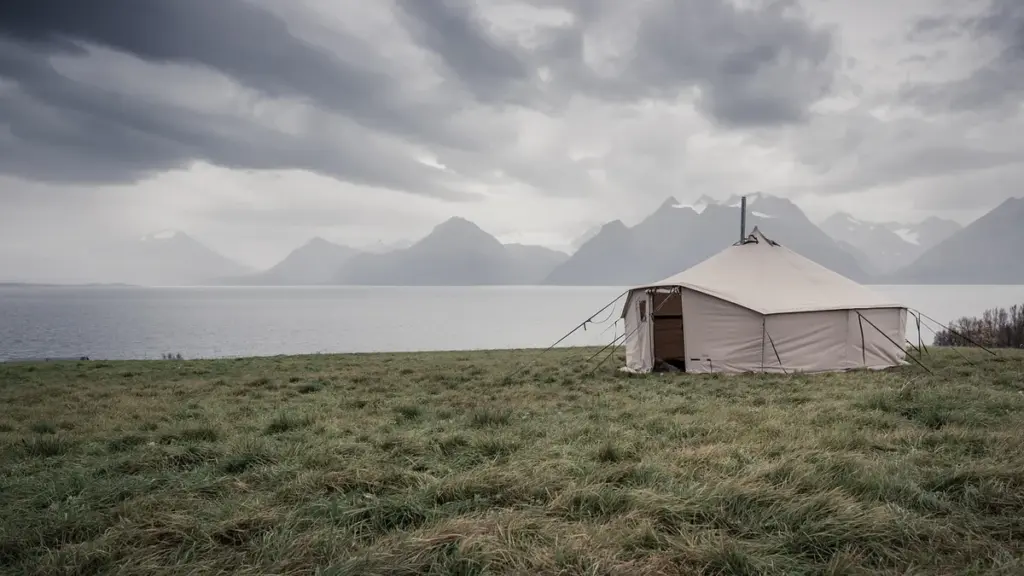
Without trees, you have three main options for camp shower privacy: mount a tent to your vehicle’s trailer hitch, pitch a freestanding pop-up frame, or use your parked vehicle itself as a windbreak with a tarp. A freestanding pop-up frame works for most trips since it needs no vehicle and packs down small; a hitch mount suits campers who always bring the same vehicle.
Key takeaways
- A freestanding pop-up privacy tent is the most flexible no-tree option. It works with or without a vehicle nearby and folds flat for storage.
- A hitch-mounted tent attaches to your vehicle’s trailer hitch and stays anchored by the vehicle’s weight, which gives it the best wind stability of the three options.
- Parking your vehicle as a windbreak and stringing a tarp off one side costs the least, since it reuses gear you likely already own.
- None of these options needs a single tree, a stake driven into rock-hard ground, or a permanent structure.
- Combine any of these with a flooring fix if the ground under your shower turns to mud — see the linked guide below.
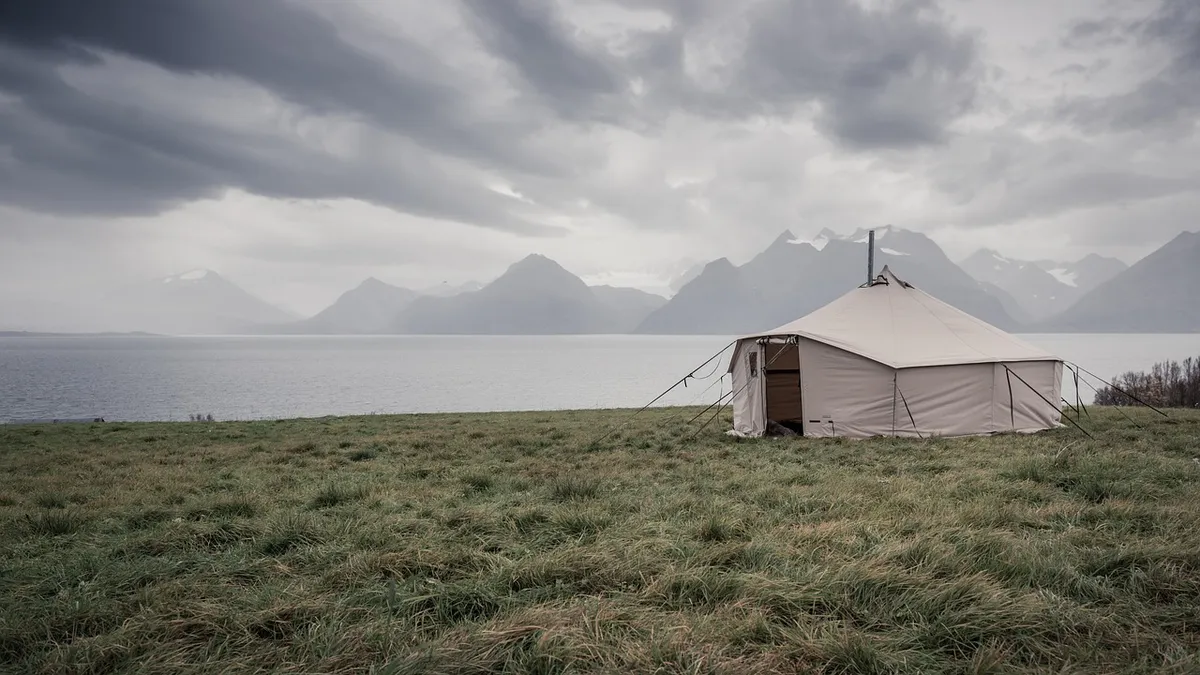
Why doesn’t a normal privacy tent setup work without trees?
Most camping shower tents are designed to be guyed out and staked into soft ground, sometimes with an assist from a nearby branch or trunk for extra stability in wind. On a beach, in open desert, on a gravel pad, or on a rocky ridge, you either have nothing to tie off to, ground too hard to stake, or both. The tent itself still works — you just need a different way to anchor and stabilize it.
This is a real, recurring problem for campers in open country, not a rare edge case. The fix is choosing one of three practical approaches instead of forcing a tree-dependent setup onto treeless terrain.
Option 1: How does a vehicle hitch-mounted tent work?
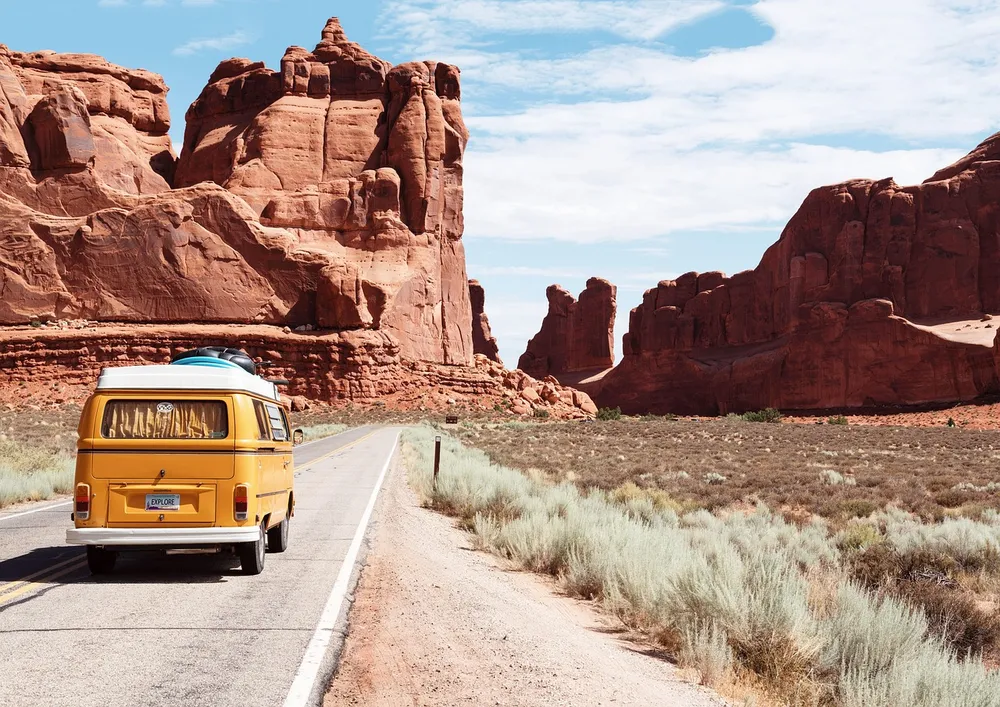
A hitch-mounted tent attaches to your vehicle’s trailer hitch receiver and can be set up or taken down independently of whether you’re driving anywhere. Because it’s anchored to the vehicle itself, it tends to hold up well in wind gusts that would rattle a lighter freestanding frame.
The tradeoff is cost and flexibility: a hitch-mount system is a dedicated piece of gear that only works if you have a hitch receiver and brought the right vehicle. It’s the better fit for campers who use the same truck or SUV trip after trip, not for someone renting a car or riding along with someone else’s vehicle.
Option 2: How does a freestanding pop-up frame work?
A freestanding pop-up privacy tent doesn’t attach to anything. It opens on its own flexible-steel frame, usually in well under a minute, and stands on its own footprint without stakes or guy lines, though staking it down is still a good idea in wind. These tents commonly run around 47 by 47 inches at the base and about 75 inches tall when open, weigh only a few pounds, and fold back into a flat carrying case roughly the size of a large dinner plate.
Because it doesn’t depend on a vehicle, a tree, or particular ground conditions, a freestanding frame is the most broadly useful option for most trips. The main downside is wind: a light frame can shift or tip in a strong gust unless you add stakes or weight down the base.
Option 3: How does a vehicle-as-barrier or tarp setup work?

If you don’t want to buy a dedicated tent, you can improvise privacy by parking your vehicle to block the most likely line of sight, then stringing a tarp off the roof rack, open doors, or trekking poles planted in the ground to close the remaining gap. This costs the least of the three options since it typically reuses a tarp and cordage you already carry, but it takes more trial and error to rig well, and the amount of privacy it actually provides depends heavily on the terrain and how exposed the site is.
This option works best as a backup or a budget-minded choice rather than a primary plan, especially at a site with other campers nearby who might have a clear sightline from an angle you didn’t account for.
How do the three no-tree options compare?
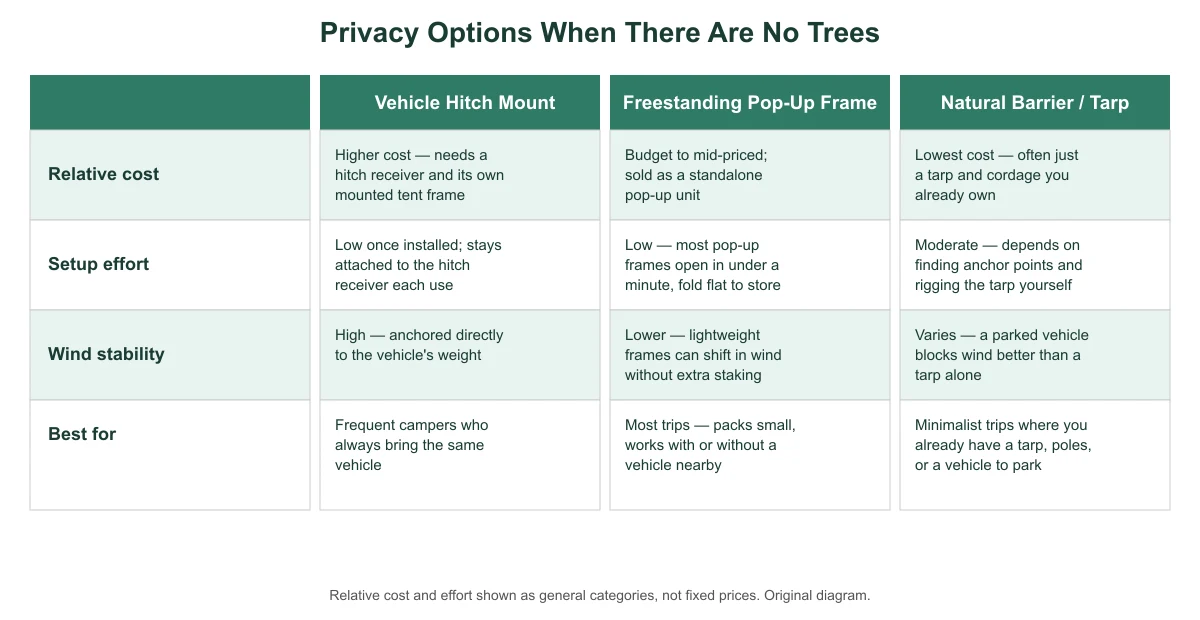
| Option | Relative cost | Setup effort | Wind stability | Best for |
|---|---|---|---|---|
| Vehicle hitch mount | Higher — needs a hitch receiver and its own tent frame | Low once installed | High — anchored to the vehicle’s weight | Frequent campers with the same vehicle every trip |
| Freestanding pop-up frame | Budget to mid-priced standalone unit | Low — opens in under a minute | Lower without added stakes | Most trips, with or without a vehicle nearby |
| Natural barrier / tarp | Lowest — reuses gear you own | Moderate — depends on anchor points | Varies by terrain and rigging | Minimalist trips or as a backup plan |
What if the ground is also a problem, not just the lack of trees?
Open, treeless terrain is often also the terrain most likely to turn muddy or hold standing water once you start pouring shower water on it — think hard-packed dirt lots or low beach grass with poor drainage. If your site has that problem on top of having no trees, pair whichever privacy option you choose with a flooring fix; see how to stop mud and standing water under your camp shower for a comparison of mats, tarps, and other ground solutions.
For the rest of the setup process once privacy is sorted — hanging the unit, filling it, and disposing of the water afterward — see the full walkthrough in how to set up a portable camping shower, step by step.
Frequently asked questions
Can I use a beach umbrella instead of a dedicated privacy tent?
A single umbrella rarely provides full coverage on its own, since it blocks a view from one direction at most. It can work as a partial screen combined with a vehicle or a second barrier, but a pop-up frame or hitch-mounted tent gives more complete privacy by itself.
Do freestanding pop-up tents need to be staked down?
Not always, but it’s a good habit in any wind. The frame’s own weight can hold it in place on a calm day, but a gust strong enough to catch the fabric like a sail can tip a lightweight frame that isn’t staked or weighted.
Is a hitch-mounted tent worth it if I only camp a few times a year?
Probably not. The extra cost and the fact that it only works with a hitch-equipped vehicle make more sense for frequent campers who already have the gear set up. Occasional campers usually get more value from a freestanding pop-up frame that works regardless of what vehicle they bring.
How much privacy does parking my vehicle actually provide?
It blocks the sightline from whichever direction you park it against, which helps most in a spot with a clear “exposed side,” like a beach facing a parking area. It does nothing for sightlines from other angles unless you add a tarp or second barrier to close the gap.
Can I combine more than one of these options?
Yes, and many campers do. Parking a vehicle on the most exposed side while using a freestanding frame or tarp to close the rest of the gap often gives better coverage than relying on either option alone.
Sources
- “Your Choice” Pop-Up Privacy/Shower Tent, representative product listing — typical dimensions and setup for this category of freestanding privacy tent.
- Thule Outset Hitch-Mounted Tent, REI product page — how a hitch-mounted tent system attaches to and uses a vehicle’s trailer hitch.
portablecampingshower.com Editorial Team. Last updated: November 13, 2026.
Leave a Reply