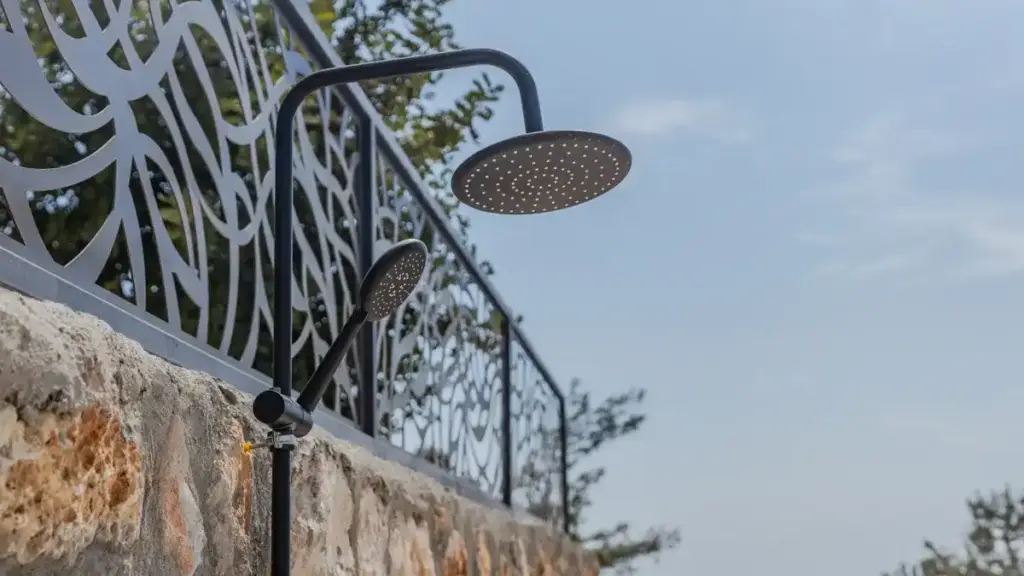
Quick answer: most outdoor hot shower systems fall into three practical setups, and the right one depends on water source, power, freeze risk, and use frequency.
An outdoor hot shower system gives you hot water outside without turning the whole project into a plumbing rebuild.
The right setup depends on your water source, your fuel or power, and whether the shower needs to live permanently or pack away.
This guide settles which type fits, what parts you need, and what to avoid.
Key Takeaways
- Hot outdoor showers fall into three practical setups: tankless gas, electric, and heated storage or portable systems.
- The choice depends on water pressure, power supply, freeze risk, and how often the shower gets used.
- A good system is more than a shower head. It needs safe water heating, control of scald risk, and a drain plan.
- The most common mistake is buying the heater first and planning the water line later. That costs time and often leads to poor flow.
- If the shower will sit outside year-round, freeze protection matters as much as the heater itself.
What an outdoor hot shower system actually needs
An outdoor hot shower system needs four things: a heat source, a water feed, a way to control temperature, and a place for wastewater to go. Miss one of those, and the shower becomes annoying fast.
Picture this: you want a rinse after the beach, the pool, or a muddy bike ride, and you need hot water in a space that may not have a full bathroom nearby. The system can be simple, but it has to match the site. A garden hose and a shower head are not enough if the water is cold and the heater has no power source.
The basic parts are usually these:
- Heater: propane tankless unit, electric tankless unit, small storage heater, or solar preheat tank.
- Water supply: hose bib, pump from a tank, or hard-plumbed line.
- Controls: shutoff valve, mixer, and sometimes a thermostat or anti-scald valve.
- Shower hardware: riser, head, hose, and mounting bracket or frame.
- Drainage: gravel pad, dry well, trench drain, or a path that keeps runoff away from foundations.
The fit changes by use case. A backyard shower for a pool house can hide a full plumbing line and a wall-mounted unit. A cabin or campsite may need a portable system that runs from a hose or reservoir. Because of that, the same heater can be right in one yard and wrong in another.
Two standards and references are worth knowing. For plumbing and fixture safety, the International Plumbing Code and local plumbing rules often shape how the system is built. For gas-fired heaters, the equipment should be installed according to the manufacturer’s instructions and local code. Those two documents matter more than any glossy product photo.
Which type of outdoor hot shower system fits your space?
The right type is the one your site can support without extra work every weekend. A propane tankless unit is the most flexible, electric is the cleanest if power is already there, and storage-based systems make sense where demand is light.
Picture this: you have a patio, a hose bib, and maybe a shed wall, but no wish to trench a line or build a full bath. Now the question is not “What shower looks best?” It is what can run safely on the utilities you already have. That answer usually comes down to fuel, pressure, and freeze risk.
Here’s the quick comparison in plain terms:
| Type | Best for | Typical tradeoff | Setup note |
|---|---|---|---|
| Propane tankless | Off-grid or flexible installs | Needs fuel storage and ventilation | Good where electric service is limited |
| Electric tankless | Permanent installs with power already in place | Needs the right electrical service | Compact, but weak service can limit performance |
| Storage heater or preheated tank | Light use | Limited hot water supply | Simple plumbing, smaller capacity |
| Solar-assisted system | Sunny sites | Weather-dependent | Often needs backup heat |
- Propane tankless: heats on demand, works where there’s no electric service, and suits remote or off-grid spots. It needs ventilation, fuel storage, and careful winter draining.
- Electric tankless: compact and tidy, but it needs the right electrical service and often a dedicated circuit. It is a poor fit where power is weak or intermittent.
- Storage heater or preheated tank: simpler to understand, but the hot water supply is limited and heat loss is real.
- Solar-assisted systems: can work well in sunny areas, but they depend on weather and often need backup heat for comfort.
A generic article usually misses the hidden constraint: flow rate. A heater can promise hot water, yet still feel weak if the shower head, hose, and source pressure are mismatched. The result is lukewarm water or a burner that cycles too much.
Another trap is placement. If the shower sits far from the heater, long runs of hose or pipe lose heat before the water reaches you. That is why compact installations usually work better than scattered ones.
The fit by setting is often this:
- Beach house or pool area: wall-mounted propane or electric unit with fixed plumbing.
- Cabin or RV site: portable propane or storage-based system.
- Year-round backyard shower: permanent plumbed system with freeze protection.
- Occasional rinse station: simple portable rig with a hose-fed heater.
How do you choose the heater and water source?

You choose the heater and water source by matching demand, pressure, and power before you buy the shower hardware. If those three do not line up, the shower looks complete and still performs badly.
Picture this: you’ve picked a nice fixture set, but the heater shuts off when two people use water elsewhere in the house. That is not a shower problem. It is a supply problem, and it shows up on day one. The supply side decides the result.
Use this order:
- Check your water source. If the shower feeds from a house line, note the pressure and whether the line can support another fixture. If it feeds from a tank or pump, confirm the pump can hold steady flow.
- Choose the heat type. Pick propane for off-grid flexibility, electric for a clean permanent install, or storage heat for light use and simple plumbing.
- Match the heater to the use pattern. A unit meant for quick hand-washing is not the same as one meant for back-to-back family showers. Read the unit’s output and minimum flow requirements before you commit.
- Plan the temperature control. Add a mixing valve or anti-scald device where the shower will be used by guests, kids, or anyone who may turn the knob too far.
- Place the heater close to the shower. Short runs reduce heat loss and make startup faster. Keep maintenance access open, too.
- Design the drain path. Make sure runoff leaves the area without pooling near footings, decks, or slippery stone.
One point gets missed a lot: outdoor showers are often exposed to dirt, salt air, and weather swings. That means the heater and valves need corrosion resistance, not just a low price tag. Brass, stainless steel, and quality coated parts tend to hold up better than thin, decorative fixtures.
The other quiet issue is noise. Some heaters are quiet enough for a patio; others are not. If the shower sits near bedrooms or neighbors, that matters more than people expect.
What about safety, freeze protection, and drainage?
Safety starts with scald control, freeze protection, and drainage, because those three things cause most of the trouble outdoors. A hot shower outside is pleasant; a line that bursts or a burner that overheats is not.
Picture this: winter is coming, the shower sits on an exterior wall, and a cold snap is due overnight. If the line holds water, freeze damage can crack fittings, split valves, and ruin the heater. In a permanent outdoor setup, that risk is not optional.
Use these protections:
- Anti-scald valve: keeps sudden hot spikes from hitting skin.
- Shutoff and drain-down points: let the line empty before cold weather.
- Insulated or protected piping: helps in shoulder seasons, though it is not a full freeze solution.
- Covered heater location: reduces rain and sun damage.
- Non-slip surface: stone, composite decking, or textured concrete works better than slick tile outdoors.
Drainage needs equal attention. A shower that dumps water into bare soil may be fine for light use, but heavy use can turn the area muddy and slippery. If the shower sits near a house, poor drainage can push water where it should never go. That is a foundation and rot problem, not just a cleanup chore.
Here is the catch: a lot of beautiful outdoor shower builds ignore winter. If you live where temperatures drop below freezing, the system should have a real drain-down plan, not just hope and a towel over the valve. Portable systems are easier to store. Permanent systems need a deliberate winter routine.
If you are dealing with gas connections or a new electrical run, the safe move is to use a qualified installer for that part. The heater must be installed to local code and the manufacturer’s instructions. That is not a formality. It is the part that keeps the system from becoming a hazard. The International Plumbing Code is one reason many installers insist on that sequence.
Common mistakes that ruin an outdoor hot shower
The most common mistakes are buying the wrong heater size, skipping drainage, and ignoring winter care. Each one costs money in repairs, poor performance, or a shower that never gets used.
Picture this: the shower is mounted, the water runs, and the first cold evening cracks a fitting or the first long rinse turns lukewarm halfway through. Those are not rare edge cases. They are the usual failures when the plan starts with looks and ends with plumbing.
Watch for these mistakes:
- Wrong heater capacity: the water comes out warm at first, then drops off when demand rises. Fix it by matching the heater to the expected flow and use pattern.
- No anti-scald control: a small knob turn can make the water too hot, especially with tankless systems. Fix it with a mixing valve.
- Long, exposed water runs: heat loss grows with distance. Keep the heater near the shower or insulate the line where possible.
- Poor drain plan: puddles make the area slippery and can push water toward the house. Fix it with a gravel base, trench drain, or directed runoff.
- No winter shutdown routine: frozen water can destroy valves and heater parts. Fix it by draining, isolating, or storing the system as designed.
- Choosing decorative parts first: pretty fittings can fail early if they are not made for weather exposure. Fix it by starting with function, then finish.
One more thing: many buyers assume an outdoor shower is automatically low-maintenance. It is not. It has fewer parts than a full bathroom, but it lives outside. That means sun, grit, cold, and splashback all work against it.
The fix is boring and effective. Use weather-rated parts, keep the run short, and plan for cleaning and winter shutdown before the first shower, not after the first failure.
How do you keep one running cleanly through the season?
You keep it running by cleaning the shower head, checking valves, and flushing the heater on a regular schedule. A 15-minute check each month can catch the problems that turn into leaks or weak flow later.
Picture this: the shower has been sitting for weeks, and the first use in spring spits grit, smells stale, or dribbles because mineral buildup has narrowed the head. Outdoor systems fail quietly. They do not usually stop all at once.
Use this basic care routine:
- Inspect the hose, head, and fittings monthly. Check for drips, rust, or cracked washers.
- Clean mineral buildup. Remove the shower head if needed and soak or flush it according to the manufacturer’s guidance.
- Test the shutoff and mixer. Make sure the water moves smoothly from cold to hot.
- Flush sediment from the heater if the model calls for it. Many tankless and storage heaters need this, especially with harder water.
- Check the drain area after heavy use. Remove debris before it clogs the runoff path.
- Winterize before freezing weather. Drain the lines, shut off fuel or power as required, and store portable parts indoors.
If the water tastes or smells odd, or the shower has been unused for a long time, flush the line before normal use. That is a simple hygiene habit, not a fancy upgrade.
The best part is that good maintenance is mostly about habit, not tools. A bucket, towel, brush, and the right wrench are often enough. The shower that gets checked early lasts longer than the one that only gets attention when it fails.
What should you buy first if you are starting from zero?
You should buy the heater and the water plan before you buy the decorative shower frame, because the frame is the easiest part to change later. The heater, supply line, and drain path are the parts that decide whether the project works.
Picture this: you’re staring at stainless fixtures and wood slats, but you still haven’t answered where the hot water comes from or where it goes afterward. That is backward. Start with the utility plan, then choose the visible parts.
A practical order looks like this:
- Pick the heat source. Propane, electric, or storage-based.
- Confirm the water feed. Hose bib, hard line, pump, or tank.
- Plan drainage. Gravel, drain, or runoff route.
- Choose the mounting style. Wall, post, or stand-alone frame.
- Select weather-rated trim. Hose, head, valves, and fasteners built for outdoor use.
This order prevents the expensive mistake: buying a pretty shower that can’t be fed safely. It also keeps the install simpler, because the line run and heater placement can shape the whole layout. If you already have a pool house or garden wall, fixed plumbing may be the cleanest route. If you do not, a portable setup is usually the smarter first step. When gas or electrical work is involved, consult a qualified professional and follow local code.
A good outdoor hot shower system is not the fanciest one. It is the one that gives stable hot water, drains well, survives weather, and stays simple to maintain. That combination is what keeps the shower in use instead of in the corner of the yard.
FAQs
What is the best type of outdoor hot shower system?
The best type is the one your site can support without strain. For off-grid or low-access spots, propane tankless systems usually make the most sense. For a permanent yard or pool area with power already in place, electric or hard-plumbed systems can be a cleaner fit.
Drafted with AI; not yet reviewed by a person.
Leave a Reply