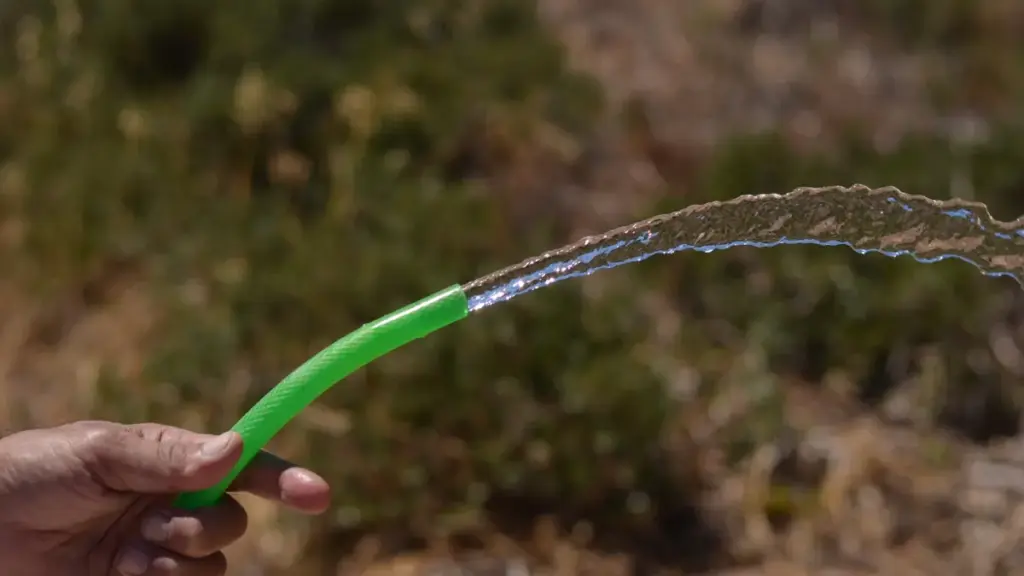
Quick answer: a travel shower is a portable wash setup that usually takes 2 to 10 minutes to use. It is a compact way to wash off when a normal shower is not available, such as on a trip, at a campsite, or after a long day in transit. It can mean a portable pump shower, a pressurized water bag, or a simple rinse kit, and the right choice depends on how much water, power, and privacy you have.
Key takeaways
- A travel shower is for washing when fixed plumbing is missing or awkward.
- The main choice is between a water bag, a hand-pump setup, and an electric pump kit.
- Power source matters as much as spray strength, especially if you have no outlet or car socket.
- The setup you can fill, carry, and clean without hassle is often the most useful one.
- A weak plan usually fails at setup, not at the actual rinse.
What is a travel shower?

A travel shower is a portable washing setup that lets you spray water on your body away from a built-in shower. It usually has 3 parts: a water container, a hose or spout, and some way to move the water, such as gravity, hand pressure, or a small electric pump.
That simple design is why the term covers several products. A basic camp water bag hangs overhead and drains by gravity. A pump shower pulls water through a hose and sends it out through a nozzle. Some versions plug into a 12V car outlet or use USB power, which makes them easier to run for quick rinses.
The point is not luxury. It is control. A travel shower helps when you need a rinse after dusty roads, beach sand, a long flight, or a workout, and the nearest bathroom is too far away or too inconvenient to use. It is also useful in places where shared showers are busy and time is short.
A generic article often skips the trade-off: a travel shower gives convenience, but it rarely gives the steady pressure or hot water of a home shower. If you want a long, warm wash every day, a portable setup may disappoint. If you want a practical rinse in 2 to 10 minutes, it can be enough.
The phrase is also used loosely online, so the first question is not “What brand?” but “What kind of travel shower fits the trip?” That answer changes the whole purchase or packing decision. For a closer look at the main options, jump to Which type should you choose?.
Which type should you choose?
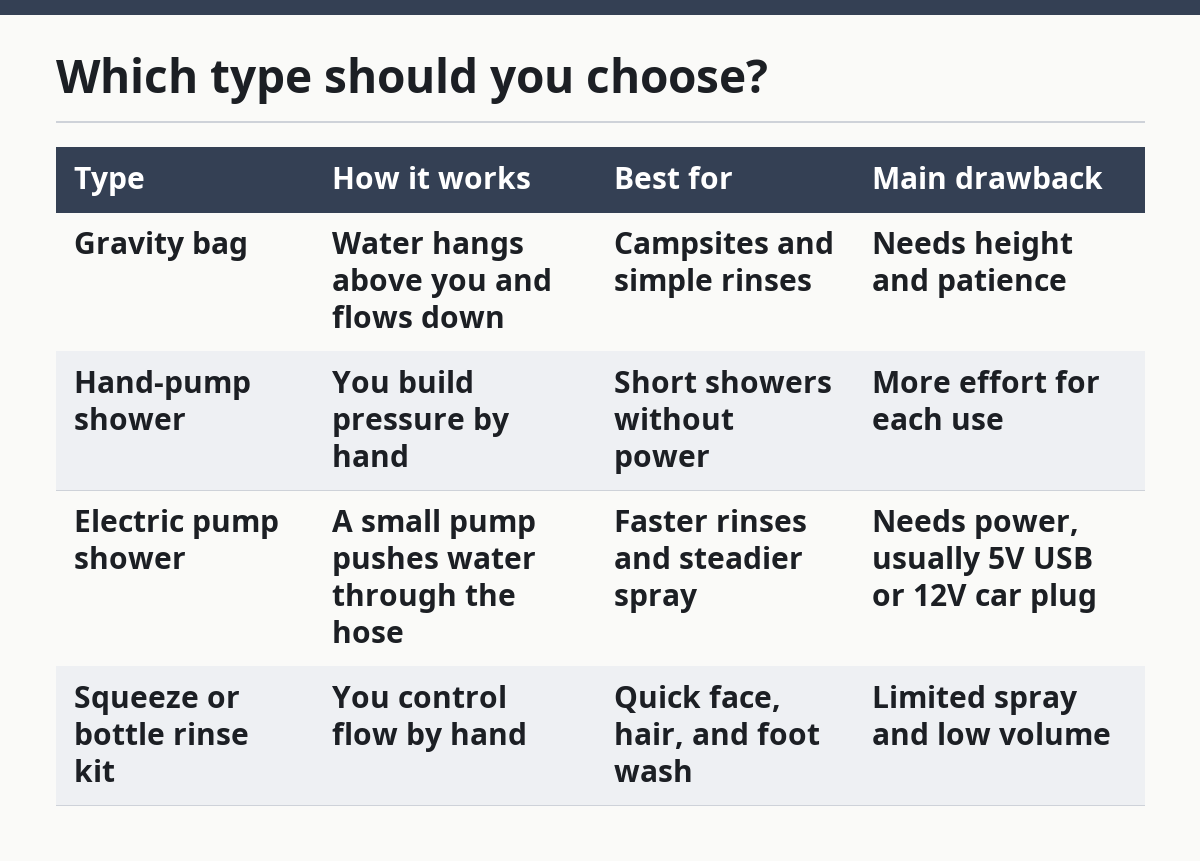
The right type of travel shower depends on power, water access, and how much setup time you can tolerate. A person with a car and a cooler full of water has different needs from someone carrying everything in a backpack.
| Type | How it works | Best for | Main drawback |
|---|---|---|---|
| Gravity bag | Water hangs above you and flows down | Campsites and simple rinses | Needs height and patience |
| Hand-pump shower | You build pressure by hand | Short showers without power | More effort for each use |
| Electric pump shower | A small pump pushes water through the hose | Faster rinses and steadier spray | Needs power, usually 5V USB or 12V car plug |
| Squeeze or bottle rinse kit | You control flow by hand | Quick face, hair, and foot wash | Limited spray and low volume |
A gravity bag is the least complicated. It is good when you can hang it from a branch, frame, or hook and you do not mind a softer flow. The price you pay is pressure. If the bag is low or the water level drops, the spray weakens.
A hand-pump shower sits in the middle. It can be useful when you want more control than a bag gives, but do not want a power cable. The cost is effort. After a few minutes, pumping can feel tedious.
An electric pump shower is the easiest to use once it is set up. It is the most like a real shower, especially when the nozzle has a steady spray pattern. It is not the best fit for every trip, especially if you have no charging source, if you are trying to travel ultralight, or if you want to avoid extra parts.
A squeeze kit is not a true shower substitute for most people. It works for a fast rinse, not a full wash. It is the right answer only when space is tight and the job is small.
For a lot of travelers, the real question is not “which is best” but “which one will still be used on day 4?” The simplest setup often wins, which is why the next step is learning how to use one well.
How do you use a travel shower?
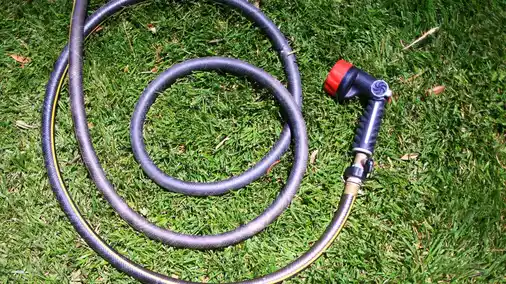
A travel shower works best when you set up the water source first, then check flow before you try to wash. A rushed setup wastes water and leaves you standing there with a weak stream.
- Fill the container with clean water. Use a jug, bottle, or bag that is meant for water, not a random container that may hold fuel, soap, or food residue.
- Set the container or pump on stable ground or hang it where it can stay upright. A gravity bag needs enough height to let water fall; a pump needs the hose to reach the bottom of the container.
- Attach the hose and nozzle before you turn anything on or open the valve. This keeps water from spilling all over the ground during setup.
- Test the spray for 5 to 10 seconds. A weak stream usually means the hose is kinked, the nozzle is clogged, or the container is too low.
- Wet, soap, and rinse in short passes. A travel shower is easier to manage when you shut the flow off between steps instead of leaving it running.
- Drain, empty, and air-dry every part after use. Standing water in a hose or bag can cause odor and residue by the next day.
That order matters because most problems come from setup, not from the rinse itself. If the shower has a power option, check the cable and battery before you add water. If it is a gravity bag, check the hanging point before you fill it. A full bag is harder to move, and a bad hook can turn into a mess fast.
A travel shower is also a water-saving tool if used with restraint. Short bursts are better than a constant open flow. That is useful in dry places, on longer trips, and anywhere water must be carried by hand. If you want the smallest footprint, the What should you check before buying one? section covers the parts that matter most.
What should you check before buying one?
A travel shower should be checked for power, capacity, hose length, and cleanup, because those four details decide whether it is useful or annoying. A flashy nozzle means little if the hose is too short or the pump needs a power source you do not have.
Start with power. If the product needs 5V USB, make sure you can charge it from a battery pack. If it needs 12V, it is more suited to a car setup. No power source means the shower is dead weight.
Then look at the water container. Some setups use an integrated bag, while others need a separate bucket or jug. The more pieces you need, the more setup time you add. That can be fine for a campsite, but frustrating for a quick roadside rinse.
Hose length matters more than many buyers expect. A hose that is too short forces you to crouch, bend, or hold the nozzle awkwardly. That is tiring and messy. A hose that is long enough lets you wash without fighting the gear.
Cleaning is the last filter. If a shower kit has tiny parts that trap soap scum, it will be annoying after 3 uses. Smooth hoses and simple nozzles are easier to keep clean. The same goes for wide openings on water bags, which are easier to dry than narrow ones.
One useful outside reference is the CDC Travelers’ Health section on water safety, which is a good place to check general hygiene advice for travel conditions: https://wwwnc.cdc.gov/travel/page/water-safety. For shower hardware basics and water-saving fixtures, the EPA WaterSense program is another useful reference: https://www.epa.gov/watersense/showerheads.
What mistakes cause the most trouble?
The biggest mistake with a travel shower is choosing the wrong type for the trip, and that usually costs time, comfort, and water. A setup that works at a campsite may be useless in a hotel parking lot or on a short layover.
One common error is buying for spray strength alone. A strong nozzle sounds good, but if the unit depends on a power outlet you will not have, it becomes a paperweight. The better question is whether the power source matches the place you will use it.
Another mistake is ignoring cleanup. Soap left in a hose can smell bad and leave residue the next day. A simple rinse and air-dry routine takes only a few minutes and avoids that problem.
People also overpack water. More water means more weight, more spill risk, and more setup time. It is better to bring what you need for one wash, then refill if necessary.
A final mistake is expecting a travel shower to behave like home plumbing. It will not. Pressure can vary, water may be cooler than expected, and the spray pattern may be narrow. If the plan depends on a long hot shower, a portable setup is the wrong tool. In other words, the limits are predictable if you plan for them.
Who is a travel shower not for?
A travel shower is not for someone who expects home-style comfort without trade-offs. If the goal is a hot, high-pressure, 15-minute shower every day, a portable setup will probably disappoint.
It is also a poor fit for travelers who hate setup. Even a simple kit takes a few minutes to fill, position, and pack away. If you want zero prep, a fixed shower is usually the easier answer.
This is not the right choice for every overnight bag either. For a single short trip with full access to a hotel bathroom, the extra gear may never earn its space. In that case, a travel shower is more burden than benefit.
The better fit is a person who values independence over comfort. That includes campers, road trippers, festival-goers, and anyone who needs a fast rinse in places where a normal shower is not available or not worth using. If that sounds like your use case, the next section can help you narrow the choice.
What is the simplest way to decide?
The simplest way to decide is to match the shower to 3 facts: where you will use it, what power you have, and how much fuss you can tolerate. Those 3 answers make the choice much easier than browsing by brand.
If you have no power and want the least possible complexity, choose a gravity bag or squeeze kit. If you have a car socket or charged battery pack and want a steadier spray, choose an electric pump. If you want a middle ground and can accept hand work, choose a manual pump.
A good travel shower is not the one with the most features. It is the one that still makes sense when you are tired, dusty, and trying to finish fast. That is the test that matters on the road, and it leads directly to the question of water use.
How much water does a travel shower need?
A travel shower usually works best with only enough water for one wash, not a big reserve. The right amount depends on how long you plan to rinse and whether you are washing hair, body, or both.
A shorter rinse is easier to carry and easier to drain. If you are trying to keep weight down, it is smarter to pack less water and use it in short bursts than to haul a heavy container you never fully use.
Can a travel shower replace a normal shower?
A travel shower can replace a normal shower for a quick wash, but it does not fully replace fixed plumbing. The difference shows up in pressure, temperature control, and how long you can stay under the water.
That is why its best use is practical, not luxury-driven. It is there for convenience, not for spa-level comfort.
Is a travel shower worth it for short trips?
A travel shower is usually not worth it for a short trip with reliable bathroom access. The gear makes more sense when you expect dust, shared facilities, outdoor stops, or limited water access.
For a weekend with hotel showers, the packing space may cost more than the benefit. For a road trip or camp stay, the same kit can feel essential.
Drafted with AI; not yet reviewed by a person.
Leave a Reply