Quick answer: for most campers, a 2.5- to 5-gallon campsite shower is enough for a basic rinse, and the right setup is the one that fits your trip length, water supply, and privacy needs. If you want quick, low-cost cleanup, a basic solar shower bag is enough; if you want stronger water flow, a pump unit is better.
Last updated: 2026

Key takeaways
- A campsite shower is about control: water use, privacy, and where the runoff goes.
- Solar bags are cheap and simple, but they depend on sun and give weak pressure.
- Pump showers cost more and feel more like a home shower, but they need power.
- The biggest mistake is treating wastewater like it can just run anywhere; if you are unsure, check campground rules or ask a ranger or campground host, since Leave No Trace and the National Park Service both stress proper waste disposal.
- A good setup keeps soap, runoff, and changing space separate.
What is a campsite shower?
A campsite shower is a portable way to bathe away from home, usually with a 2.5- to 5-gallon water container, a hose, and some kind of nozzle or pump. It can be as basic as a black bag hung from a tree limb or as involved as a pressure shower with a battery pump and pop-up privacy shelter.
The point is not luxury. The point is getting clean without hauling a full bathroom into the woods. That matters for weekend campers, long road trips, festival stays, and base camps where a rinse after hiking makes sleep and food prep much easier.
The phrase also covers more than one setup. Some campers mean a gravity shower bag. Others mean a full camp shower system with a pump, hose, and tent. The difference matters because each one solves a different problem. A 5-gallon solar bag is cheap and light, but it is slow and temperature depends on sun. A pump system gives better flow, but it needs batteries, charging, or a vehicle power source.
A campsite shower is not the same thing as washing up at a spigot with a bottle of soap. It is a controlled wash station. That means you need to think about where the dirty water goes, what surface you stand on, and how you keep the rest of camp dry. If those parts sound fussy, they are. The mess shows up later, usually in mud, slippery ground, or a wet tent floor.
For camping ethics, the Leave No Trace organization and the National Park Service both stress keeping wash water and soap out of sensitive spots; see the Leave No Trace waste-disposal guidance and the National Park Service Leave No Trace overview.
How do you set up a campsite shower?
You set up a campsite shower by choosing a spot, hanging or placing the water source, controlling runoff, and keeping your gear dry. The process is simple, but the order matters.
-
Pick a flat spot with privacy and drainage. Choose ground that will not turn into a puddle after 5 minutes of use. A slight slope is better than a bowl-shaped depression because water can move away instead of pooling under your feet.
-
Put down a barrier underfoot. A mat, tarp edge, or shower base keeps you out of mud and gives you a place to stand while changing. A dry standing area matters more than fancy soap.
-
Hang or place the water source at the right height. For gravity bags, hang the bag high enough to keep the hose clear and low enough that you can reach the nozzle. For pump systems, set the unit on stable ground near your water container or jug.
-
Test the water before you get in. Run the shower for a few seconds so you can check temperature and flow. Solar bags may be too hot after strong sun or too cold after cloud cover.
-
Use a small amount of water first. Wet your body, shut the water off, soap up, then rinse in one pass. That rhythm saves water and keeps the ground from flooding. A 5-gallon bag goes faster than most first-time users expect.
-
Direct wastewater away from camp. Keep runoff away from tents, food prep, and sleeping pads. If the site has rules for gray water or wash water, follow those rules rather than improvising. If you are setting up on land with special restrictions, check with the campground host or a land-management professional first.
-
Pack out or dry the area when finished. Shake out the mat, empty the bag if needed, and store everything so it does not drip into your vehicle. Wet gear left in a trunk for 3 hours can smell bad fast.
The biggest habit to build is not the shower itself. It is the cleanup around it. A campsite shower works best when the washing and the drying are treated as one job, but if you are unsure how runoff should be handled on a specific site, consult the local rules or a land-management professional and follow the posted guidance.
Which campsite shower type fits your trip?
The right campsite shower depends on how long you stay, how much water you can carry, and how much comfort you expect. A 1-night stopover does not need the same setup as a 7-day base camp.
| Type | Typical setup | Main strength | Main drawback | Best for |
|---|---|---|---|---|
| Gravity shower bag | 2.5- to 5-gallon bag hung overhead | Low cost and low weight | Weak pressure; sun-dependent | Simple weekend trips |
| Pump shower | Battery or vehicle-powered pump with hose | Better flow and easier rinsing | More parts and power needs | Longer trips and family camps |
| Pressure shower | Hand pump or pressurized tank | Stronger spray without a battery | More effort to pressurize | Campers who want more control |
| Shower tent system | Shelter plus water source | Privacy and cleaner changing | Bulk and extra setup time | Busy camps and roadside stops |
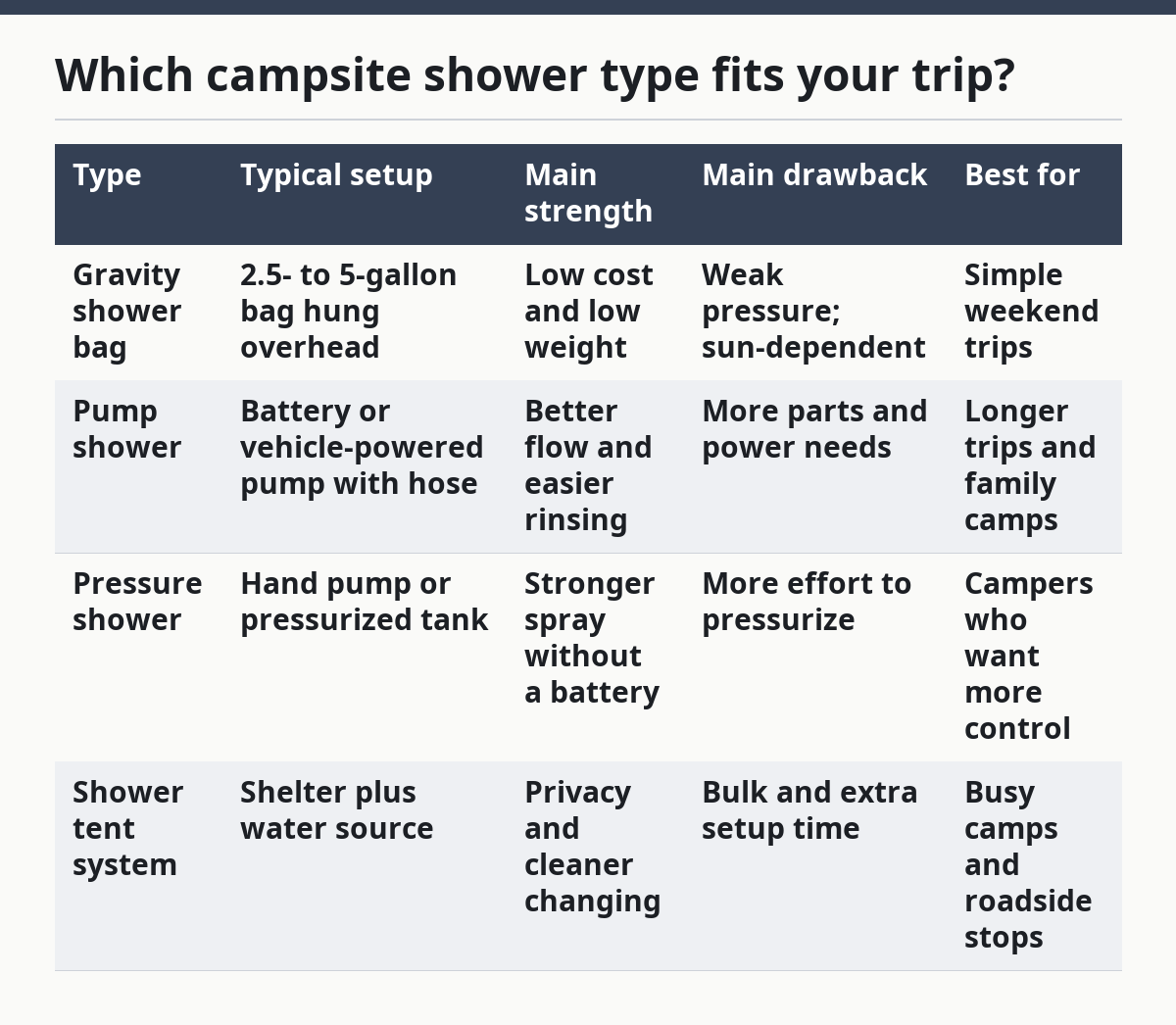
Gravity bags are the easiest first choice. They are simple, cheap, and good enough for a quick rinse after a dusty trail. The trade-off is obvious: if the bag is only partly warmed or the hose is short, the experience is basic.
Pump showers are better if you dislike a thin trickle. They are also more forgiving when the water source sits on the ground, not overhead. The downside is power. If the battery dies or the car is parked too far away, the shower stops being useful.
Pressure tanks sit in the middle. They often work well for one or two people who want a stronger spray without carrying a larger setup. They still need attention, because overfilling or mishandling pressure gear creates more hassle than a plain bag.
A shower tent is not required, but privacy matters for many campsites. If you are camping near other people, a shelter can make the whole setup feel less awkward and keep clothes off dirt. That said, a tent adds bulk, and a 10-minute rinse can turn into a 30-minute chore if setup is clumsy.
What do you need for a campsite shower?
You need a water source, a way to move water, a privacy plan, and something to stand on. That sounds basic, but missing one of those pieces is what turns a campsite shower into a wet mess.
At minimum, most campers use a container in the 2.5- to 5-gallon range, a hose or spout, biodegradable soap used sparingly, a towel, and a dry bag or bin for clothes. If the site has no built-in wash area, add a mat and a container for dirty runoff. If you camp with kids or in colder weather, add a robe or extra layer so no one has to dress while shivering.
A short gear list often works best because campsites are already crowded with boxes, coolers, sleeping pads, and chairs. A good shower setup should fit into that system instead of becoming a second campsite. If your shower kit takes 15 minutes just to unpack, it is too fussy for casual use.
Soap deserves special mention. The word “biodegradable” does not mean “dump it anywhere.” Even mild soap should be used carefully and kept away from streams, lakes, and fragile ground. A small amount goes a long way, especially when you are mostly rinsing dust and sweat, not oil paint.
For many campers, a simple rinse kit is enough: 1 water bag, 1 quick-dry towel, 1 mat, and 1 dry bag for clean clothes. That may sound plain, but plain is often the point. A campsite shower works because it removes friction, not because it copies a bathroom.
What mistakes ruin a campsite shower?
The most common mistakes are poor drainage, too much soap, and choosing the wrong shower type for the trip. Each one costs time, comfort, or both.
Too much soap is the easiest mistake to make. It leaves residue on skin, uses more water at rinse time, and can make the ground around camp slick. Use less than you think you need, especially with a 5-gallon setup. If your soap takes several extra rinses, you are using too much.
Poor drainage turns a simple wash into a muddy patch. Water that collects underfoot can splash onto clean clothes, feet, and gear. Move the shower area to better ground or use a mat that sheds water away from the standing zone.
Picking the wrong system also causes trouble. A gravity bag is fine for a solo weekend, but it feels weak for a family or for hair washing. A pump shower can feel great, but if you do not have a charge plan, it becomes dead weight after the first use.
Another mistake is forgetting privacy. People sometimes set up the water and then realize they have nowhere to change. That means clothes get dropped on dirt, shoes get wet, and the whole job feels rushed. A camp shower is smoother when the changing area is part of the plan from the start.
A smaller but real mistake is storing wet gear in a sealed box or vehicle. Even one damp towel can make a car smell musty by the next morning. Keep a separate dry bag or hang gear to air out if you can.
How do you keep a campsite shower clean and private?
You keep a campsite shower clean and private by separating wet, dry, and dirty areas. That means one place to shower, one place to change, and one place for wastewater.
Privacy starts with placement. Put the shower where other campers do not have a direct line of sight, then use a shelter if the campsite is open. A pop-up tent, tarp walls, or even a vehicle side can help, but the main goal is simple: no one should have to stand in the open while deciding where to put clean clothes.
Cleanliness comes from routine. Rinse the floor mat, shake out the towel, and keep soap in a sealed bottle. If you are using a gravity bag, close the valve after each use so the bag does not drip into storage. If you are using a pump setup, wipe the nozzle and hose before packing it away.
Wastewater is the part people skip. It is also the part that gets campsites dirty fastest. Keep gray water away from camps, and follow local site rules if they are posted. If you can see the water pooling, you are already too close to the wrong place. If you are unsure, ask the campground host or a ranger before improvising.
A campsite shower stays pleasant when it feels like a short, controlled job, not a construction project. The more you can pre-stage—towel out, clothes ready, mat in place—the less awkward the whole thing becomes.
Campsite shower FAQs
How much water does a campsite shower use?
A campsite shower usually uses only a few gallons, often centered around 2.5- to 5-gallon containers. The exact amount depends on whether you are rinsing off dust or washing long hair. If you plan to shower more than one person, bring more than one container or expect very quick rinses.
Can I use regular soap at a campsite shower?
Yes, but you should use it sparingly and keep runoff controlled. A small amount of soap is enough for most campsite washing, and extra soap only makes rinsing harder. If you are near sensitive ground or water, be stricter about where the rinse water goes.
Is a solar shower bag good enough?
Yes, for many short trips, a solar shower bag is good enough. A 2.5- to 5-gallon bag gives you a simple rinse without batteries or a complicated setup. It is not the right choice if you want strong pressure or if the weather is too cool for the bag to warm well.
Do I need a shower tent for a campsite shower?
No, but a shower tent makes privacy much easier. If your campsite is crowded or open, a tent or screen saves time and awkwardness. If you are solo and can use a vehicle or natural screen, you may not need one.
What is the biggest mistake with campsite showers?
The biggest mistake is ignoring runoff. A campsite shower can feel clean for 5 minutes and still leave mud, soap, and standing water behind. Set the shower up so the water has somewhere sensible to go, and the whole system works better.
Drafted with AI; not yet reviewed by a person.
Leave a Reply