Quick answer: A survival shower is a low-water way to wash your body when normal plumbing is gone, limited, or unsafe. A 5-gallon container is a common practical size for a short rinse, and the setup is usually a bucket, bag, or pump sprayer paired with drainage and privacy.
A survival shower is a low-water way to wash your body when normal plumbing is gone, limited, or unsafe. It is not a luxury shower; it is a plain, fast rinse setup that helps you remove sweat, grime, salt, smoke, or chemical residue with the least amount of water you can spare.
Key takeaways
- A survival shower is built for short, practical washing, not comfort.
- The right setup depends on where you are: home backup, car camping, or an emergency kit.
- Clean water, drainage, and privacy matter as much as the shower head or bag.
- A bad setup wastes water, makes a mess, or leaves dirt on skin instead of removing it.
- If you need a shower for chemical exposure, follow the safety standard for emergency washing, not a camping trick.
What does a survival shower actually do?
A survival shower gives you enough water to get clean without depending on a full bathroom. It usually means a simple system: a water container, a way to get the water onto your body, and some kind of catch or drain plan. In practice, that can be a gravity bag, a bucket and cup, a pump sprayer used for washing, or a compact portable shower head.
The point is control. You want the water to go where it matters and stop when it does not. A full home shower can use water in a way a survival setup cannot afford, while a survival shower is built around a short rinse, a quick lather, and a final wash-off.
This idea matters in three common settings. One is emergency backup at home during a water outage. Another is off-grid travel, where a campsite or vehicle has no plumbed shower. The third is true safety use, such as an emergency rinse after contact with dirt, ash, or some irritating material. For a chemical splash, use the proper emergency shower guidance from OSHA and ANSI/ISEA Z358.1, not a homemade rig.
If you are looking for spa-like pressure, this is the wrong tool. If you want a simple way to get clean with a 5-gallon container, a bucket, and a privacy curtain, it fits the job.
Which kind of survival shower do you need?
The right survival shower depends on where the water comes from, how much you have, and how private the wash area needs to be. A home backup setup and a campsite setup can look similar on paper, but they solve different problems. Start with water, delivery, drainage, and privacy.
| Type | Best for | Main parts | Main drawback |
|---|---|---|---|
| Gravity bag shower | Camps, off-grid cabins, simple backups | Hanging bag, hose, nozzle | Needs height and a place to hang it |
| Bucket shower | Tight budgets, emergency use, no pump | Bucket, cup, cloth, soap | Lowest comfort, hardest to control |
| Pump sprayer shower | Quick rinses, short-term cleanup | Garden-style sprayer or similar tank | Limited spray time and pressure |
| Portable shower system | Car camping, repeated use | Water container, pump, hose, shower head | More parts, more to store |
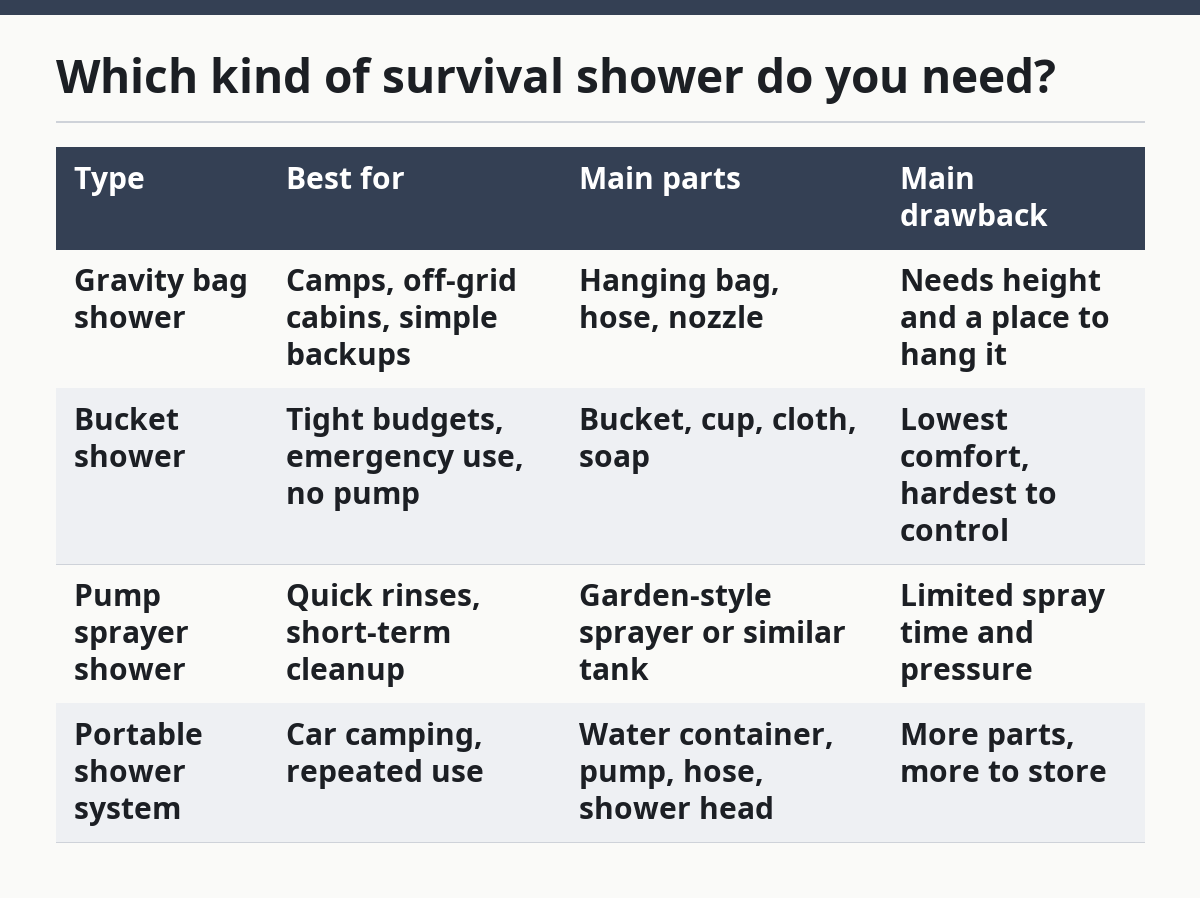
A gravity bag is the simplest if you can hang it safely at shoulder height or above. It gives you hands-free flow and keeps the setup small. A bucket shower is even simpler, but you spend more time pouring and less time washing. That makes it fine for a fast rinse and poor for a full scrub.
A pump sprayer can work when you need pressure without plumbing. It is useful for muddy boots, hands, or a quick body wash, but it is less useful when you need steady flow for a full rinse. Portable shower systems add convenience, yet they also add points of failure: hoses kink, pumps stop, batteries run low, and fittings leak.
If the shower is for a workplace or a chemical area, do not treat any of these as a substitute for proper emergency equipment; consult a safety professional and follow OSHA’s emergency washing guidance and ANSI/ISEA Z358.1.
How do you set one up step by step?
You set up a survival shower by separating the job into four parts: water, delivery, drainage, and privacy. The cleanest setup is the one that keeps each part simple.
1. Pick one water source and one container. Use a container you can move when full, such as a bucket, jug, or hanging bag. A 5-gallon container is a common size because it is manageable and still gives enough water for a short wash.
2. Choose a delivery method that matches the container. A bucket works with a cup or small scoop. A hanging bag works with a valve or hose. A pump sprayer works when you need a controlled spray for short bursts.
3. Set the shower in a place where runoff will not become a mess. Put it over gravel, a drain-safe area, or a catch basin. The goal is to keep dirty water away from sleeping gear, cooking gear, and clean clothes.
4. Create privacy before you start the water. Use a screen, tarp, changing tent, or vehicle side if needed. A shower that feels exposed gets rushed, and rushed washing leaves soap behind.
5. Wash in the right order. Wet the body first, soap the dirtiest areas second, then rinse from top to bottom. That order keeps one dirty hand from undoing the whole wash.
6. Save the last water for the parts that matter most. If the container is running low, finish with hairline, underarms, groin, feet, and hands. Those areas tend to carry odor and grime fastest.
7. Dry fast and dress clean. Have a towel and clean clothes ready before you start. A survival shower works best when the whole changeover takes minutes, not half an hour.
The practical result should be simple: skin that feels clean, soap rinsed away, and no standing puddle where you need to walk. If you end with muddy feet, sticky skin, or a soaked floor, the setup needs to change. Those problems are usually fixable.
What makes a good survival shower work?
A good survival shower works because it uses less water without making the wash worse. That sounds obvious, but many bad setups chase flow instead of function. More water pressure does not matter if the water misses your body or drains into a mess.
The most important trade-off is comfort versus control. A warm, pressurized spray feels better, but it needs more hardware and usually more water. A simple gravity flow feels plain, but it is easier to run from a 5-gallon supply and easier to store in a vehicle or closet.
Water temperature matters too. Cold water is fine for a fast rinse in many cases, but it can make a longer wash miserable. If you are using a heated source, keep it safe and moderate. Overheated water adds risk, especially in a narrow tent or small room. For emergency washing after chemical exposure, follow the site’s safety rules and the equipment’s instructions, not personal preference.
Soap choice also matters. A small amount of basic soap is often enough. Too much soap creates extra rinse work, and extra rinse work burns water. A cloth or washcloth can help remove dirt from skin with less water than trying to spray everything off at once.
A survival shower is not the right answer for every problem. If you need a long hot shower after a long day, it will feel underpowered. If you need emergency decontamination after contact with a hazardous substance, the right move is proper emergency equipment and professional guidance, not a campsite workaround. OSHA’s emergency washing requirement is the floor, not the ceiling, in that situation.
What are the common mistakes?
The most common mistakes are poor drainage, poor privacy, and trying to make a survival shower act like a regular shower. Those mistakes waste water and make the setup harder to use the second time.
One mistake is hanging a bag or nozzle without thinking about where the water goes. If the runoff pools under your feet, the whole area turns slick. The fix is to place the setup where water can soak away or be collected safely.
Another mistake is starting without towel, soap, and clothes ready. That turns a 10-minute wash into a cold, clumsy search through bags. Keep everything within arm’s reach before you open the water.
A third mistake is using too much pressure or too much spray for the amount of water available. That feels efficient for the first 30 seconds and then leaves you half washed. A short, controlled rinse is usually better than a broad spray.
A fourth mistake is choosing the wrong system for the setting. A pump sprayer may be fine for quick rinses, but it is less suited to repeated family use. A bucket may be enough for one person in an emergency, but it is poor for daily off-grid life. Match the setup to the real use, not the idea of the use.
A fifth mistake is forgetting hygiene around the shower itself. Dirty hands on a clean towel, muddy shoes in the rinse area, or soap on the floor all undo the point. A survival shower should be simple enough that the cleanup after the cleanup stays small.
Who is a survival shower not for?
A survival shower is not for anyone who needs a true emergency decontamination station, a high-pressure household replacement, or a long-term comfort shower. If the job is chemical safety, follow OSHA guidance and the applicable ANSI/ISEA Z358.1 standard, because the details matter there.
It is also a poor fit for people who expect normal shower habits to transfer directly into a low-water setup. A survival shower takes a different rhythm. You rinse, soap, rinse again, and stop when the job is done. If you want endless hot water and strong spray, you are looking at a different system entirely.
It is also a poor fit for a setup with no drainage plan. Even a 5-gallon wash can ruin a sleeping area if the water has nowhere to go. It is also not ideal where privacy is impossible and the user will avoid taking the shower at all.
That said, the idea is still useful because it solves a real problem with plain parts. A bucket, a hose, a bag, or a sprayer can keep a person clean when a bathroom is not available. The limit is the point: once you understand the limit, the shower becomes useful instead of frustrating. That is the whole job.
What should you remember before you buy or build one?
You should remember that the shower is only one part of the system. Water source, storage, drainage, and privacy matter as much as the shower head itself. A cheap setup that ignores those pieces often works worse than a plain bucket and cup.
Start by asking what problem you are solving. Home outage, car camping, off-grid cabin, and safety rinse are different jobs. A 5-gallon gravity bag can make sense for one and be awkward for another. A pump sprayer may be enough for quick cleanup but not for daily use.
Also remember the honest trade-off: the simpler the setup, the less comfortable it usually is. That is normal. The goal is not a spa experience. The goal is to get clean, protect skin, and keep the mess under control.
If the shower is for a hazardous area, stop here and use the right emergency standard instead of improvising. OSHA’s emergency washing guidance and ANSI/ISEA Z358.1 exist because minutes, flow, and placement can matter more than convenience.
What do people ask about a survival shower?
How much water does a survival shower need?
A survival shower uses only as much water as the wash requires, so the amount depends on the setup and the task. A 5-gallon container is a common practical size because it is still portable and can support a short rinse, but the right amount can be less if the goal is only hands, feet, or a quick body wash.
Can I make one with a bucket?
Yes, a bucket can be the simplest survival shower. A bucket with a cup, scoop, or cloth gives you a basic wash method with almost no parts, but it is slower and less comfortable than a hanging bag or pump setup. It works best when water is scarce and speed matters more than comfort.
Is a survival shower the same as an emergency shower?
No, a survival shower is not the same as a true emergency shower. A survival shower is a low-water washing setup for general cleanup, while an emergency shower is safety equipment meant to flush dangerous material from the body. For chemical exposure or similar hazards, use the proper emergency standard, not a homemade substitute.
What is the easiest setup to store?
The easiest setup to store is usually the one with the fewest parts. A compact bag, a small hose, or a simple bucket takes less space than a full portable shower system with pump, fittings, and frame. If storage space is tight, fewer parts usually means fewer problems later.
Drafted with AI; not yet reviewed by a person.
Leave a Reply