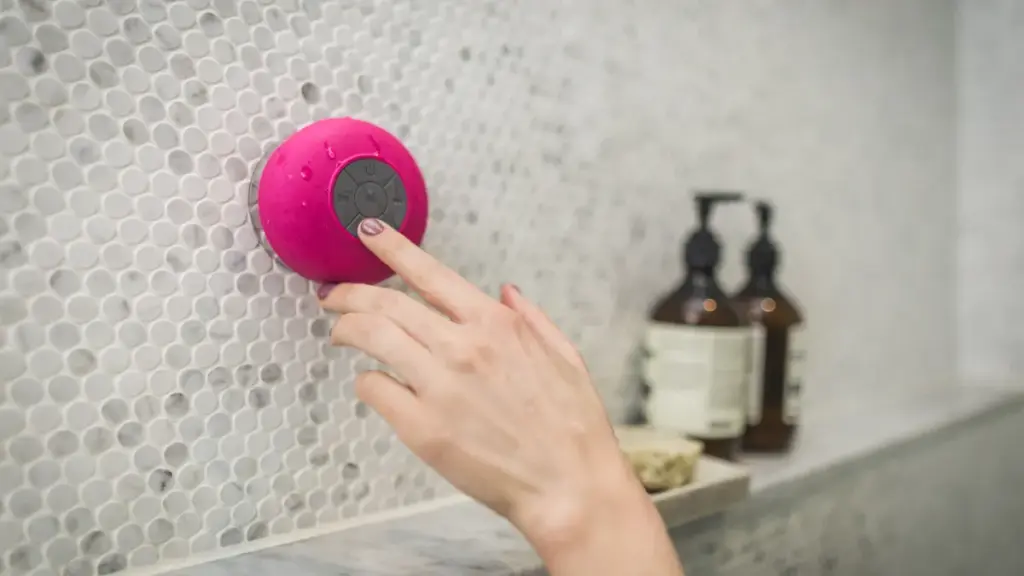
Quick answer: Portable Shower: The Complete Guide is about choosing a setup that works in 10 to 20 seconds of test time, in a space you can actually manage. A portable shower is a shower setup you can move, pack away, and use without a permanent built-in stall. It is the right choice when you need bathing in a temporary space, a rental, a campsite, or a backup setup during a renovation. It is not the best fit if you want the same pressure, drainage, and comfort as a fixed shower every day.
Key Takeaways
- Portable showers are short-term, movable shower systems made for transport or easy storage.
- The best type depends on location, setup time, and whether built-in drainage matters.
- Setup usually means choosing a water source, placing the base, connecting the hose, managing drainage, and testing the spray.
- A portable shower makes sense when mobility, storage, and fast setup matter more than luxury.
What is a portable shower?
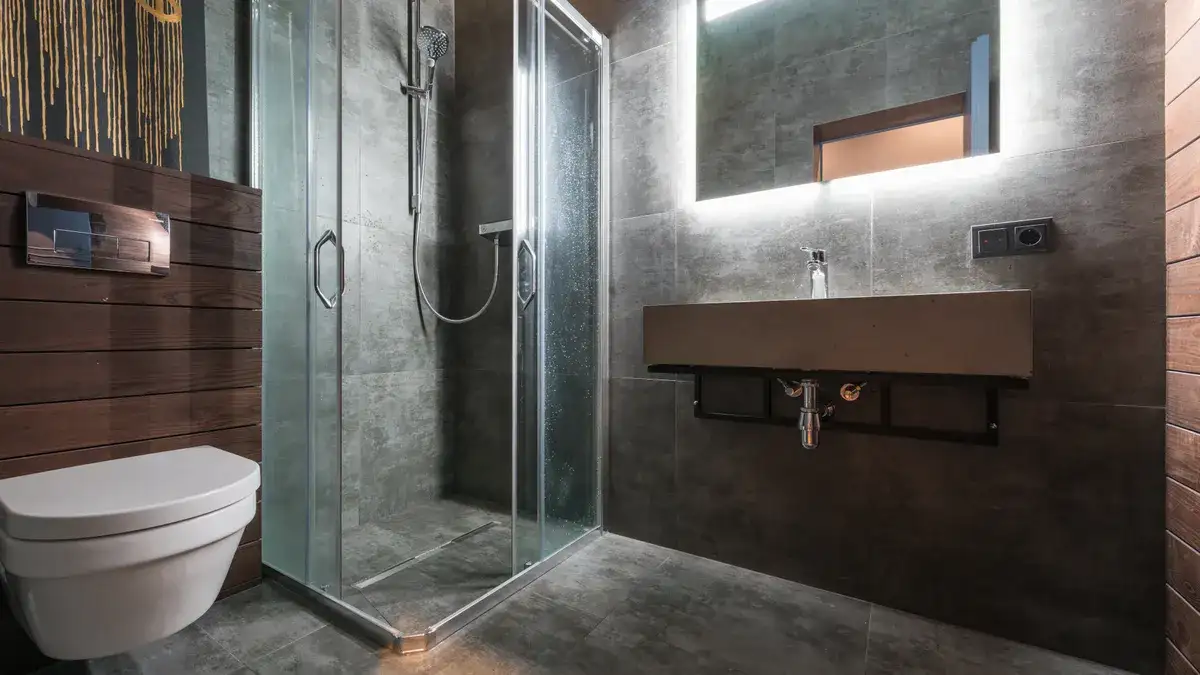
Portable Shower: The Complete Guide starts with a simple definition: a portable shower is a shower system built for short-term use, easy storage, or transport. It usually combines a water source, a spray head, a hose, and some kind of base or enclosure, and it may connect to a tap, a bucket, or a small pump depending on the model.
The point is flexibility, not luxury. A fixed shower is tied to plumbing and a permanent drain, while a portable one is designed to be set up in minutes or taken down just as fast. That makes it useful for campers, travelers, renters, people working through a bathroom remodel, and anyone who needs a wash station in a place without a full bathroom.
Portable showers vary a lot in how they work. Some are simple handheld kits meant for rinsing or pet care. Others are enclosed units that stand on the floor and use a tray, curtain, or tent. A few are built for outdoor use and depend on gravity or a small pump. A common mistake is to treat all portable showers as if they solve the same problem; when safety or drainage is involved, consult a professional and check the manufacturer instructions before you buy. They do not. A campsite shower, a compact indoor unit, and a wash-down kit for gear all serve different jobs.
If you are comparing options, read the supporting articles on portable ahower, portable shiwer, portable showe, portable showet, and portable showrr as they are added to this pillar page. Those pages can handle the narrower cases without turning this guide into a jumble.
For background on water-use basics, the EPA WaterSense showerheads page is worth a look, and home water-safety guidance from the CDC is useful when a setup sits in a bathroom, laundry room, or other enclosed space.
Which type should I choose?
Therefore, the right type depends on where you will use it, how much setup time you can tolerate, and whether you need drainage built in. A good match for a campsite is often the wrong choice for a small apartment bathroom.
Here is a practical way to sort the common options:
| Type | Best for | Main advantage | Main drawback |
|---|---|---|---|
| Handheld rinse kit | Quick rinsing, pets, gear | Small and easy to store | Limited comfort and coverage |
| Bucket or pump shower | Camping, off-grid use | Works without fixed plumbing | Needs water management and power or pumping |
| Enclosed portable shower stall | Temporary indoor or outdoor bathing | More privacy and splash control | Takes more space and setup time |
| Gravity-fed setup | Simple outdoor use | No electric pump needed | Pressure is usually modest |
| Travel shower bag | Simple washups | Very compact | Not a true shower experience |
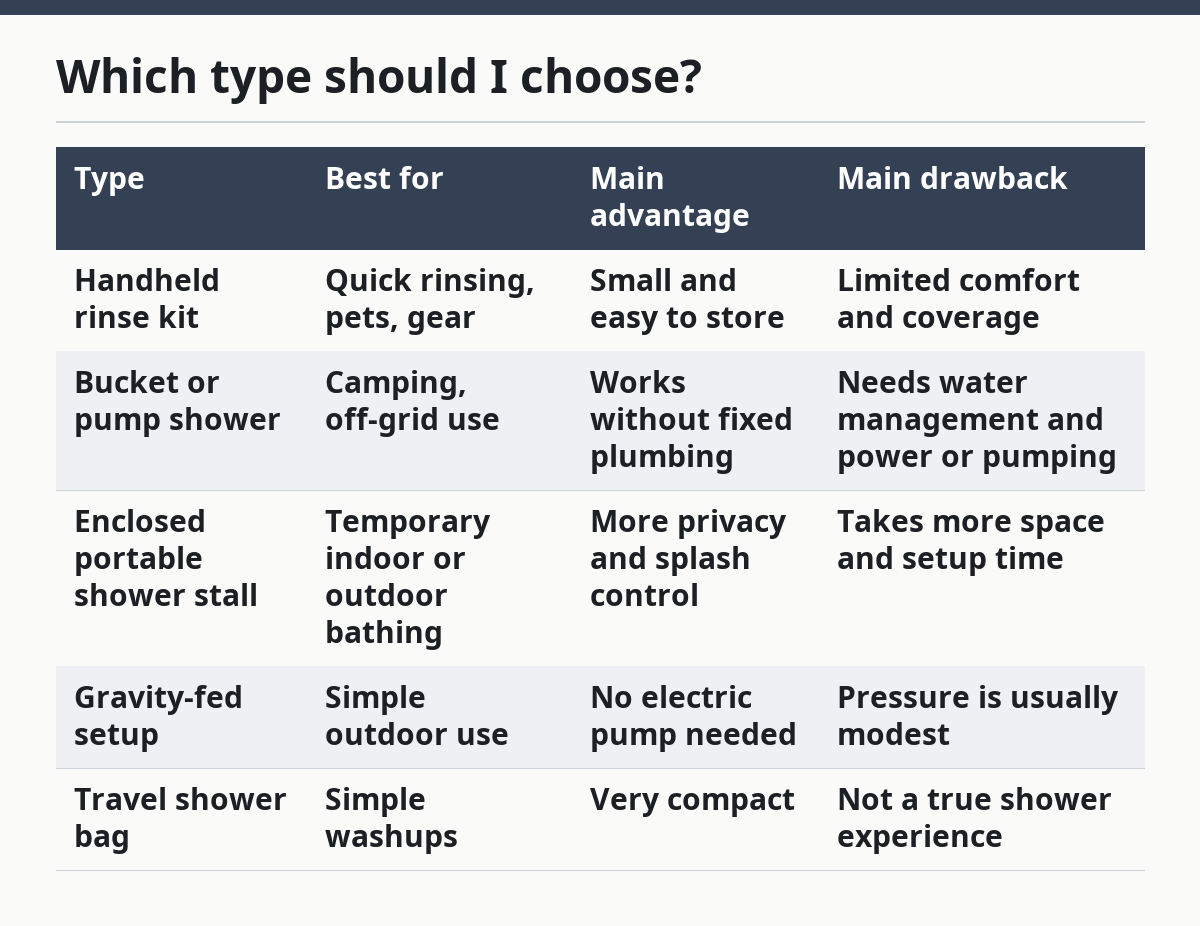
A handheld rinse kit is the simplest choice. It is useful when the goal is to wet, wash, and rinse in a hurry, not to recreate a bathroom shower. A pump or bucket setup is better when you need portability plus a steady spray. An enclosed stall makes sense when privacy matters more than compact storage.
In short, the main trade-off is usually the same: the more portable the unit, the less like a permanent shower it tends to feel. A small travel bag may weigh very little and pack flat, but it will not match the comfort of a stall with a tray, hose, and curtain. A larger freestanding unit can feel closer to a real shower, but it needs more floor space and more care with water collection.
If you live in a studio, rent short term, or need a backup during repairs, a middle-ground setup is often best. It should be easy to move, but still sturdy enough to handle repeated use. That usually beats the smallest option on paper.
How do you set one up?
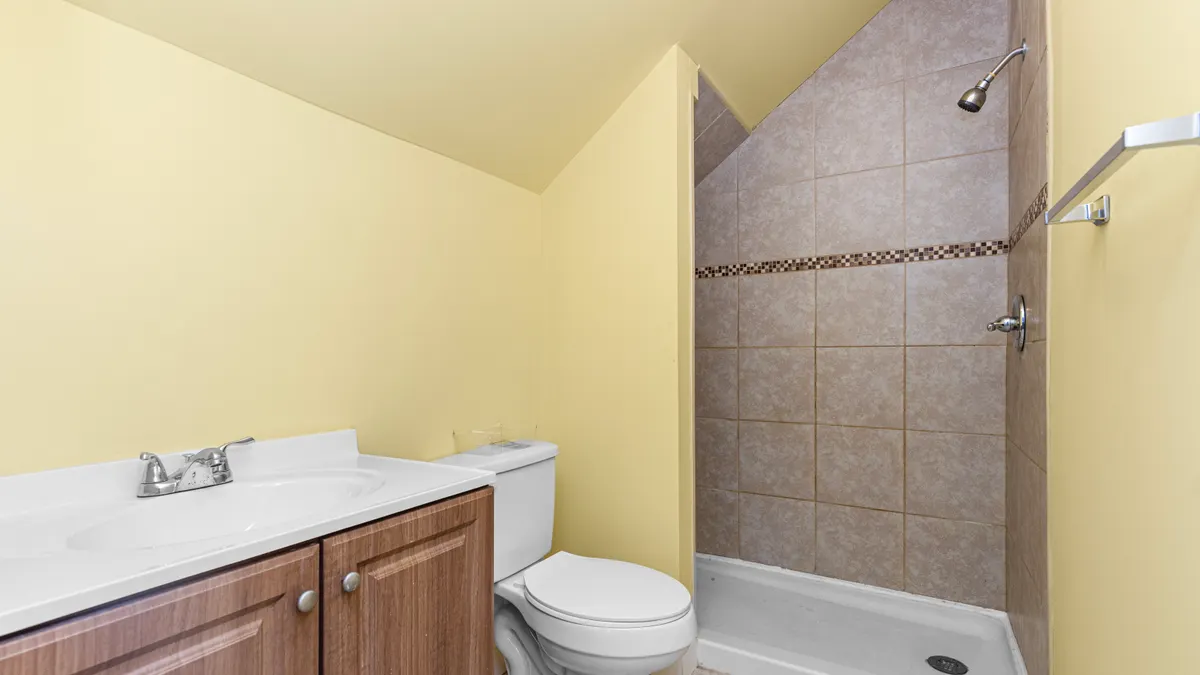
Next, you set up a portable shower by choosing the water source, placing the base, connecting the hose, managing drainage, and testing the spray before full use. The exact order changes by model, but the core job is always the same: keep water where you want it and away from the rest of the room.
A basic setup process looks like this:
- Pick a flat surface that can handle water, such as a patio, bathroom floor, or utility area. A level base reduces wobble and helps water drain in one direction.
- Set the base, tray, or mat first. A stable floor piece gives the rest of the unit a place to sit and lowers the chance of tipping or splashing.
- Attach the hose and shower head to the water source or pump. A tight connection matters more than speed here, because loose fittings waste water and make a mess.
- Place any curtain, frame, or enclosure around the shower area. Privacy is not cosmetic in this case; it also helps keep overspray from reaching nearby walls or gear.
- Run a short test for 10 to 20 seconds. The goal is to check spray direction, flow, and drainage before anyone steps in fully.
- Adjust the head height, flow setting, or pump position if needed. Small changes often fix the biggest problems, especially with splashback and weak spray.
The biggest setup mistake is skipping the test run. A shower that looks fine in dry assembly can still leak at a hose joint, spray at an angle, or pool water at one corner. Another common miss is placing the unit too close to fabric, paper, or electronics. Even a small splash pattern can travel farther than expected.
If the model uses a pump, give the power cord or battery pack a safe route that stays out of standing water. If it uses gravity, raise the water source enough to get a usable stream, but not so high that the setup becomes unstable. A compact setup that fails in the first 2 minutes is more trouble than a larger one that takes 5 extra minutes to build.
What makes a portable shower worth buying?
And a portable shower is worth choosing when storage, mobility, and fast setup matter more than luxury. The right unit saves space, cuts setup stress, and gives you a usable wash solution in places where a fixed shower is impossible or impractical.
The main features that matter are the ones that affect day-to-day use. Look at the hose length, the stability of the base, the type of water source, the size of the enclosure, and how the unit drains. A long hose sounds helpful, but if it is awkward to coil or drags on the floor, it can be a nuisance. A tall stall sounds private, but if it takes over the room, it may not fit the space you actually have.
Material quality matters too. Thin fabric and flimsy connectors often fail at the parts that get handled most: zippers, hose couplings, corners, and seams. A portable shower does not need to be heavy-duty in the industrial sense, but it should survive regular folding, unfolding, and wiping down. If the setup depends on a floor tray, that tray should feel solid enough to stand on without bending or shifting.
One useful way to judge the product is to ask what problem it solves first. If the problem is “I need a quick rinse after a beach day,” then a small rinse kit may be enough. If the problem is “I need a private bathing space for several weeks during repairs,” then you need something closer to a full stall. The wrong choice usually comes from buying for the wrong use case, not from choosing a bad brand.
This is also where people overpay. A portable shower with a long feature list is not always better than a simpler one, especially if you will not use the extras. If you do not need a pump, a curtain system, or a tall enclosure, do not pay for them. A good portable shower is the one that fits the room, the routine, and the cleanup effort.
What are the common mistakes?
So the most common mistakes are ignoring drainage, choosing the wrong size, and treating a portable shower like a permanent bathroom fixture. Each one can turn a simple setup into a wet, awkward mess.
Drainage is the first failure point. If water has nowhere to go, it spreads under the tray, runs toward doors, or soaks nearby flooring. The fix is simple: plan the water path before setup, not after the floor is already wet. A towel on the side is not a drainage plan.
Size is the second issue. A large enclosure in a small room sounds comfortable, but it can block movement and make cleaning harder. A unit that fits on paper may still be too tight once you add the hose, curtain, and room to turn around. Measure the space and leave room for the person using it, not just the footprint of the product.
The third mistake is overcomplicating the water source. Some setups need a tap, some need a bucket, and some need a pump. Forcing the wrong source into the wrong design usually gives weak flow or constant leaks. A model built for a bucket should not be judged against a plumbed shower, because the job is different.
A fourth mistake is forgetting cleanup. Portable shower parts need drying, wiping, and storage. If the process takes too long, the setup will get left out, mildew will build up, and the benefit of portability disappears. A model that folds fast but dries slowly can still be a poor choice if you need it often.
The simplest rule is this: if setup and cleanup feel like a chore on day one, they will feel worse on day ten. A portable shower should save effort, not create a second household task.
How do you keep it working well?
Finally, you keep a portable shower working well by cleaning the hose, drying every surface, checking connections, and storing parts flat or loosely coiled. Small maintenance habits matter more than long repair sessions.
After each use, wipe down the tray, curtain, and spray head so mineral spots and soap residue do not build up. Let the parts dry fully before storage if possible. Moisture trapped in a folded curtain or hose can lead to odor and wear much faster than normal use alone.
Check the joints and fittings every few uses. If a connector feels loose, tighten it before the next shower instead of waiting for a leak. Hoses that stay twisted or kinked will wear faster, so store them in a relaxed loop. A 1-meter or 2-meter hose still needs gentle storage; length does not protect it from damage.
If the shower has a pump, keep the pump intake clear and follow the product’s own care steps. A blocked intake can reduce flow even when the rest of the setup looks fine. If the unit uses a curtain or enclosure, keep the lower edges clean so grime does not collect where the fabric meets the floor.
The real win here is consistency. A portable shower that gets a quick wipe and proper drying after each use usually holds up much better than one that is left wet and crammed into a bag. That is true whether the unit is used once a week or every day.
Is a portable shower right for you?
Overall, a portable shower is right for you if you need flexibility more than permanence and you can accept some limits on pressure, drainage, and comfort. It is not right for you if you want a fixed, high-comfort bathing space with no setup or cleanup.
The best fit is a person who values temporary convenience: someone living through renovations, staying in a small rental, camping, or needing a backup wash station. The wrong fit is someone who wants a permanent substitute for a built-in shower but does not want to manage hoses, mats, or water disposal. A portable setup can do a lot, but it does not erase the physics of water in a small space.
It also may not be the right answer if your room is already tight and you cannot spare floor space for a tray or enclosure. In that case, a very small rinse kit may be more practical than a full stall. That is the trade-off most guides skip. Bigger is not always better, and the strongest portable setup is the one that leaves the room usable after the shower is packed away.
For readers comparing models, the useful question is not “Which portable shower is best?” It is “Which type matches my space, my water source, and my cleanup tolerance?” Once those three are clear, the right choice usually becomes obvious.
What should I know before I pick one?
Specifically, you should know the space, the water source, the drainage plan, and the storage size before you pick one. Those four details decide whether a portable shower feels helpful or annoying.
A buyer often starts with price alone, but that can hide the real cost of a bad fit. A cheaper unit that does not fit the room or drains poorly becomes expensive in frustration. A larger unit that actually works in the space can be the better value even if it takes more room and more setup time.
The safest way to think about it is to match the product to the setting. Outdoor use, indoor use, travel use, and emergency use are all different jobs. A model that works well in one setting may fail in another because of pressure, privacy, or cleanup needs.
For extra reading on the narrower variants, the sister pages on portable ahower, portable shiwer, portable showe, portable showet, and portable showrr can cover model-specific questions without crowding this guide.
Frequently asked questions
Can a portable shower replace a regular shower?
In short, a portable shower can replace a regular shower for temporary use, but not always for long-term comfort. It is a practical backup for camping, rentals, and renovations, yet it usually gives up some pressure, space, and drainage quality. If you need daily, long-term bathing with no compromises, a fixed shower is still the better option.
Do portable showers need plumbing?
However, a portable shower does not always need plumbing. Some connect to a tap, while others use a bucket, gravity feed, or pump. The key is matching the model to the water source it was built for, because the wrong pairing usually leads to weak flow or leaks.
Are portable showers hard to clean?
Likewise, a portable shower is usually simple to clean, but only if you do it after use. Wiping the tray, hose, and curtain takes less time than dealing with soap buildup or mildew later. Dry storage matters as much as cleaning, because trapped moisture causes most of the long-term problems.
What is the biggest mistake people make with portable showers?
Ultimately, the biggest mistake is ignoring drainage. Water that has no clear path will spread into the room, under flooring, or around nearby items. A solid drainage plan matters more than a fancy spray head or a larger enclosure.
Who should avoid a portable shower?
On the other hand, a portable shower is a poor choice for anyone who wants a permanent bath solution with no setup, no cleanup, and no floor planning. It is also a weak fit for very tight spaces where even a small tray or curtain would block daily movement. In those cases, a simpler rinse kit or a fixed shower plan usually makes more sense.
Drafted with AI; not yet reviewed by a person.
Leave a Reply