A camping shower is a portable way to rinse off when you are away from a plumbed bathroom, and the right one depends on water source, heating method, and how much setup you want. Quick answer: for a 1-night or low-effort trip, a 2- to 5-gallon gravity or solar shower is usually enough; for stronger flow, a pressurized pump setup is the better fit.
Key takeaways
- A camping shower is not one product. It can be a bag, a pump, a bottle, or a full enclosure setup.
- The main choice is between ease, water pressure, and heat.
- A simple setup often beats a more complex one on short trips.
- Water use matters because a shower can drain a small tank fast.
- The wrong shower is usually the one that is too heavy, too slow, or harder to clean than the trip can support.
What is a camping shower?
A camping shower is a portable system that lets you wash outside a fixed bathroom, usually with a bag, hose, nozzle, or hand pump. The basic job is the same across models: store water, move it to a spray point, and give you enough control to rinse soap off without wasting the whole supply in one go.
The common types are easy to tell apart. A gravity shower hangs overhead and uses height alone to move water. A solar shower is usually a black bag that warms in sunlight, often holding around 5 gallons. A pressurized shower uses a hand pump, foot pump, or battery-powered pump to push water through a hose. A bottle-style shower is smaller and better for quick rinses or washing hands than for a full body wash.
Therefore, the trade-off is simple. More pressure usually means more parts, more weight, and more cleanup. Less pressure means less fuss, but also slower rinsing and less comfort if you need to wash long hair, sandy feet, or cooking grease off your hands. That matters on a 2-night trip far more than on a long base-camp stay.
A generic article often says “pick what fits your needs” and stops there. That leaves out the real question: what kind of trip are you taking, and how much water can you spare? A solo camper with a 3-gallon jug needs a different setup than a family with a 5-gallon pail and a private site.
Which type of camping shower should you buy?
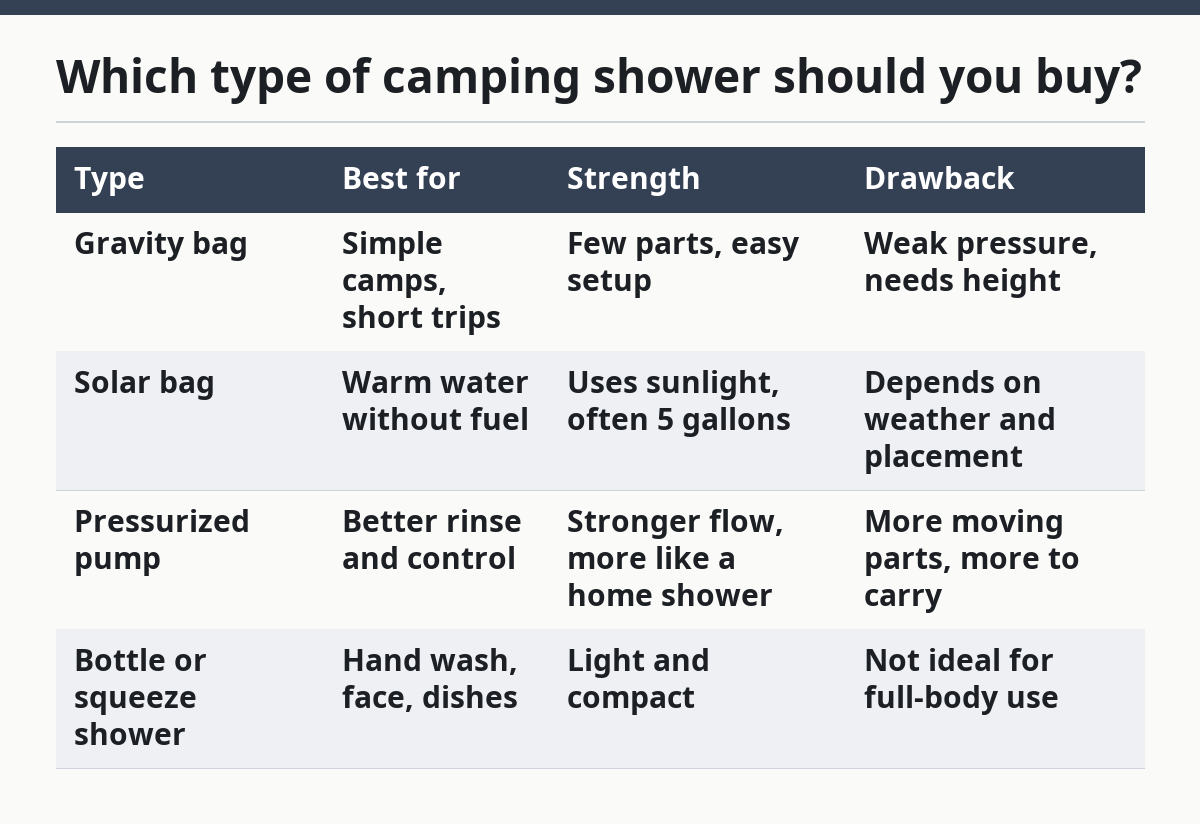
The right camping shower is the one that matches your water supply, heat source, and patience level. If you want the quickest answer, choose a gravity bag for low cost and low complexity, a solar bag for warm water, and a pressurized pump shower if you want stronger flow and do not mind extra gear.
Here is the practical comparison:
| Type | Best for | Strength | Drawback |
|---|---|---|---|
| Gravity bag | Simple camps, short trips | Few parts, easy setup | Weak pressure, needs height |
| Solar bag | Warm water without fuel | Uses sunlight, often 5 gallons | Depends on weather and placement |
| Pressurized pump | Better rinse and control | Stronger flow, more like a home shower | More moving parts, more to carry |
| Bottle or squeeze shower | Hand wash, face, dishes | Light and compact | Not ideal for full-body use |
For example, the biggest mistake is buying for the “ideal” campsite instead of the one you actually get. A tall hanging setup may seem fine until the only branch is too low or the site has no good overhead anchor. A solar bag seems efficient until the day is cloudy and the water stays cold. A pump shower may look like the best upgrade until you realize you also need a stable basin, a way to catch runoff, and a spot to dry the hose.
If you camp from a vehicle and value comfort, a pressurized setup may be worth the extra bulk. If you backpack, carry weight matters more than water pressure, and a large shower system usually makes no sense. That is the cleanest rule: the more remote and weight-sensitive the trip, the smaller and simpler the shower should be.
How do you set up a camping shower step by step?
A camping shower works best when you set it up in the right order: water first, height or pressure second, then drainage and privacy. The order matters because a full bag or tank is awkward to move after it is already hanging or connected.
-
Fill the water container to the marked capacity. If the bag or tank is listed at 3 to 5 gallons, stop there rather than packing it tight to the top. That leaves room for movement and makes lifting or pumping easier.
-
Heat the water only if the model is designed for it. Solar bags are made to sit in the sun, while some other containers are not. Warm water makes rinsing faster and more comfortable, especially for shampoo or sunscreen.
-
Hang or place the unit at the right height or on a flat base. Gravity models need height to work, while pump units need a steady surface so they do not tip. A stable setup gives a steadier stream and fewer spills.
-
Attach the hose, nozzle, or sprayer before you start using water. A tight connection matters more than fancy features. Loose fittings waste water and make the spray uneven.
-
Test the flow for a few seconds before stepping fully in. This lets you check pressure, temperature, and nozzle control. The result should be a usable spray, not a sudden blast or a dribble.
-
Use short bursts instead of leaving water running. Turn the stream on only when you need it. That keeps a 5-gallon supply from disappearing in what feels like one minute.
-
Drain and dry the system after use. Empty leftover water, shake out the hose, and let the bag or tank dry before storing it. That helps cut odor and keeps the inside from getting slimy.
A long setup guide often forgets cleanup, but cleanup is part of the product. A camping shower that is easy to fill but miserable to dry will be annoying by the third trip. The best systems are usually the ones you can pack away clean in under a few minutes.
What should you look for before you buy?
A camping shower should be judged by capacity, pressure, heat method, and how easy it is to clean. Those four details tell you more than a long list of features.
Start with capacity. Smaller units are easier to carry, but they run out quickly if more than one person needs a rinse. A 2- to 5-gallon range is common for camp use, and that difference changes the whole trip. A 2-gallon bag can be fine for hands and face, while a 5-gallon bag is more realistic for a full rinse.
Therefore, pressure comes next. A gentle stream is fine for washing off dust, but it may feel weak when you want to rinse soap from hair or thick sunscreen. Pump systems cost more in complexity, yet they usually give better control. Gravity models are simpler, but the stream often depends on how high you can hang them.
Heat is the third choice. Solar warming is free, but it depends on sun and time. If you want warm water on demand, you need another heat plan or you need to accept a cooler wash. A cold shower may sound tolerable on a hot afternoon, then feel much worse after dark.
Cleaning matters more than people think. Narrow hoses, hidden valves, and hard-to-open caps can trap residue and make the unit harder to rinse. That is not just annoying; it also makes the unit harder to trust on the next trip. Look for parts you can reach with your hand and dry with a towel.
For broader guidance on minimizing impact and handling wash water outdoors, the Leave No Trace principles explain campsite hygiene practices, and the National Park Service has guidance on staying clean in backcountry settings. Those sources are useful because they remind campers that a shower is only one part of the wash-up routine.
What mistakes cause the most trouble?
The most common camping shower mistakes are too much water, too little stability, and no plan for runoff. Those mistakes cost time, comfort, and sometimes a messy campsite.
Using more water than the setup can handle is the first problem. A small container empties fast when the nozzle runs the whole time, and then the shower stops halfway through. The fix is to wet, pause, soap, and rinse in short bursts.
Because stability matters, the second problem is ignoring it. A hanging bag can swing, a pump can tip, and a full container can strain a weak hook. The result is spilled water and a shower that feels harder to manage than a quick wash with a basin. The fix is to use a firm anchor or flat base before you start.
Skipping cleanup is the third problem. Leftover water, soap residue, and closed-up hoses can create odor and grime. That costs you time later and can shorten the life of the gear. The fix is to empty, rinse, and dry every part before packing it away.
Choosing the wrong style is the last big mistake. A backpacker who buys a bulky pressurized kit may end up leaving it home. A vehicle camper who buys the tiniest bottle shower may end up frustrated after one use. The right choice is the one that fits the trip you actually take, not the one you imagine.
Who is a camping shower not for?
A camping shower is not for someone who wants a full indoor shower experience without any setup, drying, or cleanup. If you want strong pressure, hot water on demand, and zero gear handling, a camp shower will disappoint you.
It is also a poor fit for trips where every ounce matters. On a backpacking route, a 5-gallon bag or a pressurized unit is usually too much bulk for the benefit it gives. In that case, a small rinse bottle or simple wash kit makes more sense.
The other bad fit is a trip with no place to manage water responsibly. If there is no private space, no stable hanging point, or no way to keep runoff under control, the shower becomes more trouble than help. For those setups, a basic wipe-down and hand wash may be the better option.
How do you make it work on real trips?
A camping shower works best when you match it to the trip length, the number of users, and the available water. That is the part most buyers miss, because they focus on the product and ignore the routine around it.
On a 1-night stop, a simple gravity bag or even a bottle-style rinse may be enough. On a longer car-camping trip, a solar bag or pump system makes more sense because comfort starts to matter more after the first day. If two or more people need to wash, capacity becomes the main limit, not the spray pattern.
Therefore, the smartest habit is to treat the shower as a tool, not a bathroom replacement. If you are unsure how to balance hygiene, water use, or skin needs, consult a health professional and follow the National Park Service and Leave No Trace guidance before you settle into a routine. Use it for the part of the wash that matters most, then stop. That keeps the water supply under control and avoids the disappointment of trying to stretch a small system into a full-home routine.
A camping shower is useful when it is small, clean, and easy to live with. It is not useful when it is heavy, fussy, or overbuilt for the kind of camping you do.
Questions people ask about camping showers
How much water does a camping shower need?
A camping shower usually uses a small container, often in the 2- to 5-gallon range. That is enough for a quick rinse, but not enough for unlimited running water. The right amount depends on how many people need to wash and how carefully the water is used.
Can a camping shower get hot water?
Yes, some camping showers warm water with sunlight, and those are usually the simplest option. A solar bag works best when it sits in direct sun for a while. If you want dependable warmth, a solar model helps, but it still depends on weather and time.
Is a pump shower better than a gravity shower?
A pump shower gives stronger pressure, while a gravity shower gives simpler setup. The pump style is better when you want a more controlled rinse, especially for hair or thicker soap. The gravity style is better when you want fewer parts and less to break or clean.
What is the easiest camping shower to pack?
The easiest camping shower to pack is usually the one with the fewest parts and the smallest dry footprint. Gravity bags and small bottle-style rinsers are simpler than full pump systems. If space matters more than comfort, compact gear is the safer choice.
Do I need a camping shower for every trip?
No, many trips do not need one at all. If the goal is just to clean hands, face, or sandy feet, a bottle, basin, or wipe-down may be enough. A camping shower makes sense when comfort, privacy, or multiple wash-ups matter enough to justify the extra gear.
Drafted with AI; not yet reviewed by a person.
Leave a Reply