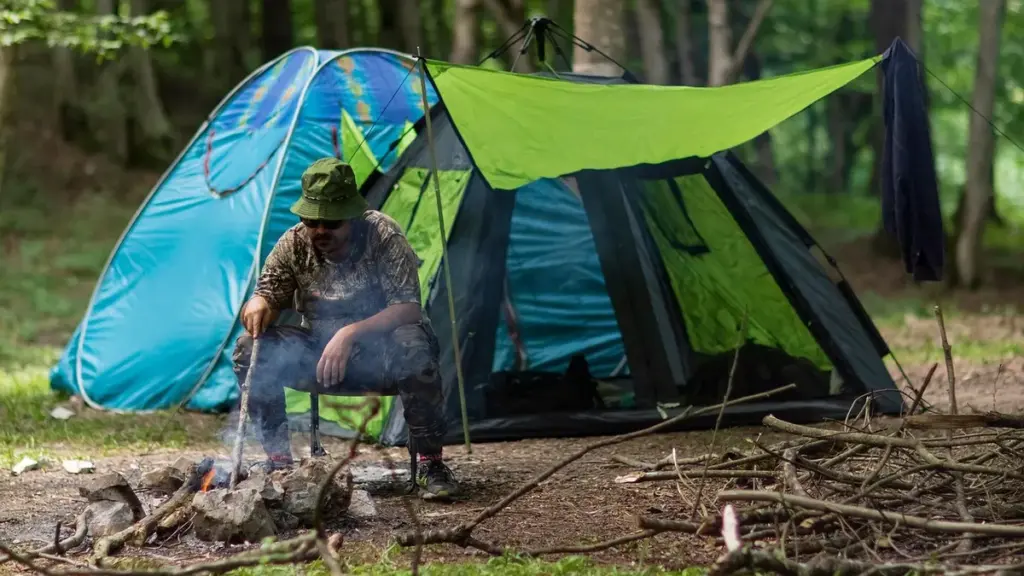
Carry your camp shower’s used water well away from any lake, stream, campsite or trail, strain out food bits and soap scum with a mesh strainer or cloth, then scatter it broadly over soil or leaf litter instead of pooling it in one spot. Leave No Trace commonly cites roughly 200 feet (about 70 adult steps) as the distance to aim for, though always check whether your specific site sets its own stricter rule.
Key takeaways
- This checklist is for a hand-carried bag or pump camp shower, not an RV’s built-in gray water tank, which follows different rules entirely.
- Leave No Trace’s commonly cited guidance is roughly 200 feet from water, trails and campsites — treat that as widely used practice advice, not a single nationwide law.
- Straining the water before you dump it, and scattering it widely instead of pooling it, matters as much as the distance itself.
- Some specific parks and public lands set their own distance or disposal rules that can differ from the 200-foot figure — check before you assume it applies.
- Less soap, used sparingly and only if it’s biodegradable, means less to deal with at disposal time.
What counts as gray water from a camp shower?
Gray water is the used water that comes out of your shower after it’s touched your skin, hair and any soap — it’s different from the clean water still sitting in the reservoir, and different from sewage or blackwater, which doesn’t apply to a shower at all. For a portable bag or pump shower, that gray water either runs straight off your body onto the ground as you rinse, or collects in a basin or mat you’re standing on, depending on your setup.
Most of the advice you’ll find online about gray water disposal is written for RVs with a sealed gray water tank that gets dumped at a designated station. That’s a completely different system with its own rules, and none of it applies directly to a hand-carried camp shower that has no tank to begin with. This checklist is written specifically for the portable kind — if you haven’t set one up yet, see how to set up a portable camping shower, step by step first.
Step 1: Shower well away from water sources and campsites
Leave No Trace’s bathing and gray water guidance commonly cites roughly 200 feet (about 70 adult steps) as the distance to put between your shower spot and any lake, stream, river, trail or campsite. That’s a widely cited practice recommendation from Leave No Trace’s own published guidance, not a single federal law that applies everywhere — some parks and public lands set their own distance requirements that can be different. Canyonlands National Park, for example, bans camping within 300 feet of a water source, a park-specific rule that doesn’t come from the same source as the 200-foot figure and shouldn’t be confused with it.
Practically, this means picking your shower spot before you fill the reservoir, not after. If you’re not sure your site allows this at all, check is it legal to shower outside at a campground or on public land first, since the legal answer varies by exactly where you’re camping.
Step 2: Use only a small amount of biodegradable soap
Even soap labeled biodegradable needs soil microbes to actually break it down over time — it doesn’t vanish on contact, and it can still harm fish and plants if it goes straight into open water. Leave No Trace’s bathing guidance recommends using biodegradable soap sparingly and away from any water source for exactly this reason.
The practical takeaway: less soap means less residue in your gray water, which makes the straining and scattering steps below easier and more effective.
Step 3: Strain the water before you dump it
If your shower setup collects water in a basin, mat or bucket rather than letting it run straight into the ground, pour it through a mesh strainer or a piece of cloth before disposing of it. Leave No Trace’s gray water disposal guidance specifically calls for straining out food particles and other solids, since those are what actually attract animals to a campsite — the water itself is less of a draw than what’s floating in it.
If you’re rinsing straight onto open ground with no basin to strain, this step mostly matters when you’ve been using the water to rinse off dishes or food residue along with your body; for a plain rinse-off shower, straining is less critical, but it’s an easy habit to build in either way.
Step 4: Scatter it broadly instead of dumping it in one spot
Once it’s strained, pour the water over a wide area of soil, leaf litter or low vegetation rather than letting it all collect in one puddle. Leave No Trace’s own guidance describes scattering gray water widely as part of responsible disposal, since concentrating it in one place can create a muddy, smelly spot and draws more attention from wildlife than spreading the same amount of water over a larger area.
In practice, this often means walking a few steps between pours if you’re disposing of a basin’s worth at once, rather than tipping it all out in a single motion.
Step 5: Check whether your specific site sets a different rule
The 200-foot figure is Leave No Trace’s own practice recommendation, cited across several of its published pages, not a single nationwide law written into one federal statute. Some parks set their own distance (Canyonlands’ 300-foot water setback for camping is one real example, even though it’s a different specific rule than general gray water disposal). Some state parks regulate wastewater disposal directly and more strictly — California’s state park rules, for example, prohibit depositing wastewater on the ground or into water at all. For the fuller comparison across land types, see is it legal to shower outside at a campground or on public land.
When in doubt, the posted rules at your specific campground, park or BLM field office win over any general guideline, including the 200-foot figure in this article.
The full gray water checklist
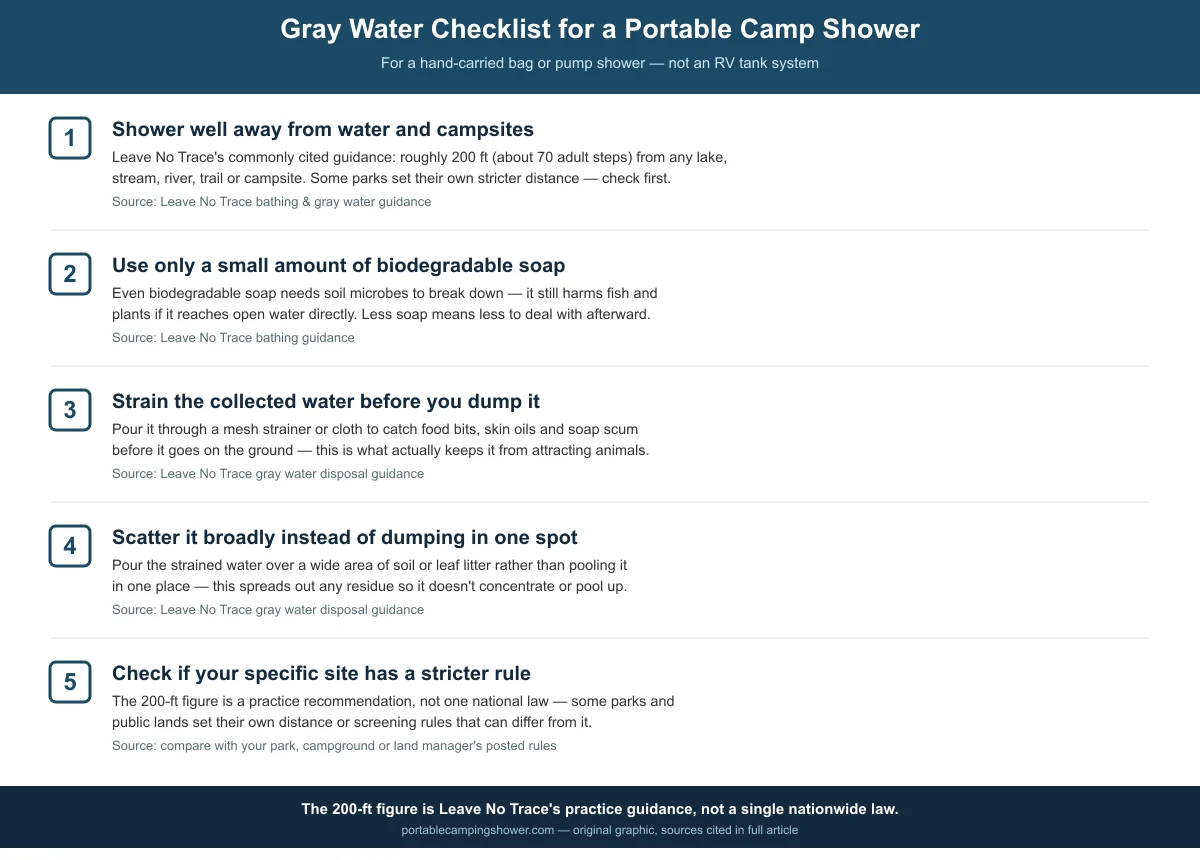
| Step | What to do | Why |
|---|---|---|
| 1. Distance | Shower roughly 200 ft (about 70 steps) from water, trails and campsites — or your site’s own stricter rule | Keeps soap and residue away from water sources and other campers |
| 2. Soap | Use only a small amount of biodegradable soap | Less residue to deal with, less potential harm if any reaches water |
| 3. Strain | Pour collected water through a mesh strainer or cloth | Removes food bits and solids that attract animals |
| 4. Scatter | Spread the strained water over a wide area, not one spot | Avoids a muddy, concentrated puddle |
| 5. Verify | Check your park, campground or land manager’s own posted rule | The 200-ft figure is general practice advice, not one universal law |
Does this apply near a lake or river you’re also drinking from?
Yes, and if anything, it matters more. Soap and gray water residue upstream or near a water source can affect anyone filtering or treating that water downstream. The same 200-foot practice, strain-and-scatter approach applies whether you filled your shower from a tap, a jug you brought, or the lake or river itself. If you’re filling directly from natural water, the filling and the showering shouldn’t happen in the same spot — fill at the water’s edge, then carry the full shower well away from the water before you actually use it and apply soap.
Frequently asked questions
Is 200 feet an exact legal requirement?
No. It’s Leave No Trace’s commonly cited practice recommendation for gray water and bathing, not a single federal or nationwide law. Some specific parks or public lands set their own distance rules that can be stricter, different, or (in places with no specific rule) effectively rely on this same general guidance. Always check your specific site.
Can I just pour the water into a hole I dig?
Leave No Trace’s guidance favors scattering gray water over a wide area rather than concentrating it in a hole, since spreading it out reduces the chance of a smelly, muddy spot or standing water that attracts animals. A single hole works against the “scatter broadly” principle this checklist is built on.
Does this apply to RV gray water tanks too?
No. An RV’s gray water tank is a sealed system meant to be emptied at a designated dump station, under a different set of rules entirely. This checklist is written specifically for a hand-carried bag or pump camp shower that has no tank and no dump station to use.
What if I’m at a site with running water and a drain?
Use it. A provided sink, shower house or marked gray water disposal point is almost always the better option over disposing of water on open ground, and it sidesteps the distance question entirely. This checklist is for situations where no such facility exists.
Do I need to treat the water before dumping it if I used soap?
No chemical treatment is needed or recommended for gray water disposal itself. The two things that matter are using only a small amount of biodegradable soap in the first place, and following the distance, straining and scattering steps above.
Sources
- Leave No Trace, How to Take a Bath While Camping — distance, soap-use and bathing practice guidance.
- Leave No Trace, Skills Series: Grey Water Disposal — straining and scattering guidance for gray water specifically.
- Leave No Trace, Principle 3: Dispose of Waste Properly — the broader waste-disposal principle this guidance sits under.
- eCFR, 43 CFR § 8365.1-1, Sanitation — the federal BLM rule distinguishing wash water from sewage/refuse, with no stated distance of its own.
- National Park Service, Canyonlands National Park backcountry regulations — a park-specific water-source setback distance, cited for comparison only.
portablecampingshower.com Editorial Team. Last updated: November 13, 2026.
Leave a Reply