
Portable Ahower is a shower you can set up without a fixed bathroom, usually with a water source, a pump or gravity feed, and a hose with a shower head. If you need a way to rinse off at a campsite, job site, cabin, or after a road trip, Portable Ahower is a practical answer.
Key takeaways
- A Portable Ahower is not one product; it is a small system made from a water container, a way to move water, and a shower head.
- The best setup depends on where you are using it: campsite, vehicle, yard, or off-grid cabin.
- A 5-gallon bucket, a 12-volt pump, and a hose is a common basic setup, but it is not the only one.
- Heat, water pressure, and drainage matter more than most buyers expect.
- A Portable Ahower is a poor fit if you need full bathroom privacy, long hot showers, or constant indoor plumbing performance.
What is a portable shower?
A Portable Ahower is a movable shower system that lets you wash with stored or carried water instead of a fixed plumbing line. It usually includes a water container, a hose, and a shower head, and it may use gravity, a hand pump, or a 12-volt electric pump.
That simple setup can be as basic as a 5-gallon bucket and a hose, or as organized as a small shower tent with a pump, heater, and drain tray. The key point is that the shower is temporary and self-contained.
Portable showers are used in places where a standard bathroom is not practical. That includes camping, van travel, beach trips, cabins, barns, outdoor events, and emergency cleanup after mud, dust, or sweat. Portable Ahower is also useful for washing pets, boots, tools, or gear when a sink is not enough.
The main trade-off is comfort versus convenience. A fixed shower gives steady hot water, drainage, and privacy. A Portable Ahower gives flexibility, but the water supply is limited, the pressure may be lower, and setup takes a few minutes. If you want a daily shower that feels like a home bathroom, a portable system is usually the wrong tool.
A second trade-off is water use. EPA WaterSense explains how efficient showerheads can reduce water use in fixed showers, and that same idea matters here because portable systems often run from tanks or buckets. Less water use means longer wash time from the same container, which is one of the main reasons Portable Ahower users care about flow control. See the EPA’s WaterSense showerhead guidance and the CDC’s general advice on water system hygiene for stored water and sanitation: EPA WaterSense showerheads and CDC Legionella prevention.
Which portable shower type should you choose?
The right Portable Ahower type depends on power, privacy, and how much water you can carry. A gravity bag is the lightest option, a pump shower gives the most control, and a shower tent adds privacy but also bulk.
Here is the quick comparison:
| Type | How it works | Best for | Main drawback |
|---|---|---|---|
| Gravity bag | Water hangs above you and flows down by gravity | Lightweight camping and short rinses | Low pressure and limited height |
| Hand-pump system | You pressurize the container by hand | Simple setups with no electricity | More effort for each use |
| 12-volt pump | A small pump moves water from a bucket or tank | Car camping, vans, and off-grid setups | Needs power and more parts |
| Heated portable shower | Water is warmed before or during use | Cooler weather and longer washes | More weight, cost, and setup time |
| Shower tent kit | A screen or tent creates privacy around the shower | Campsites and shared spaces | Extra space and pack time |
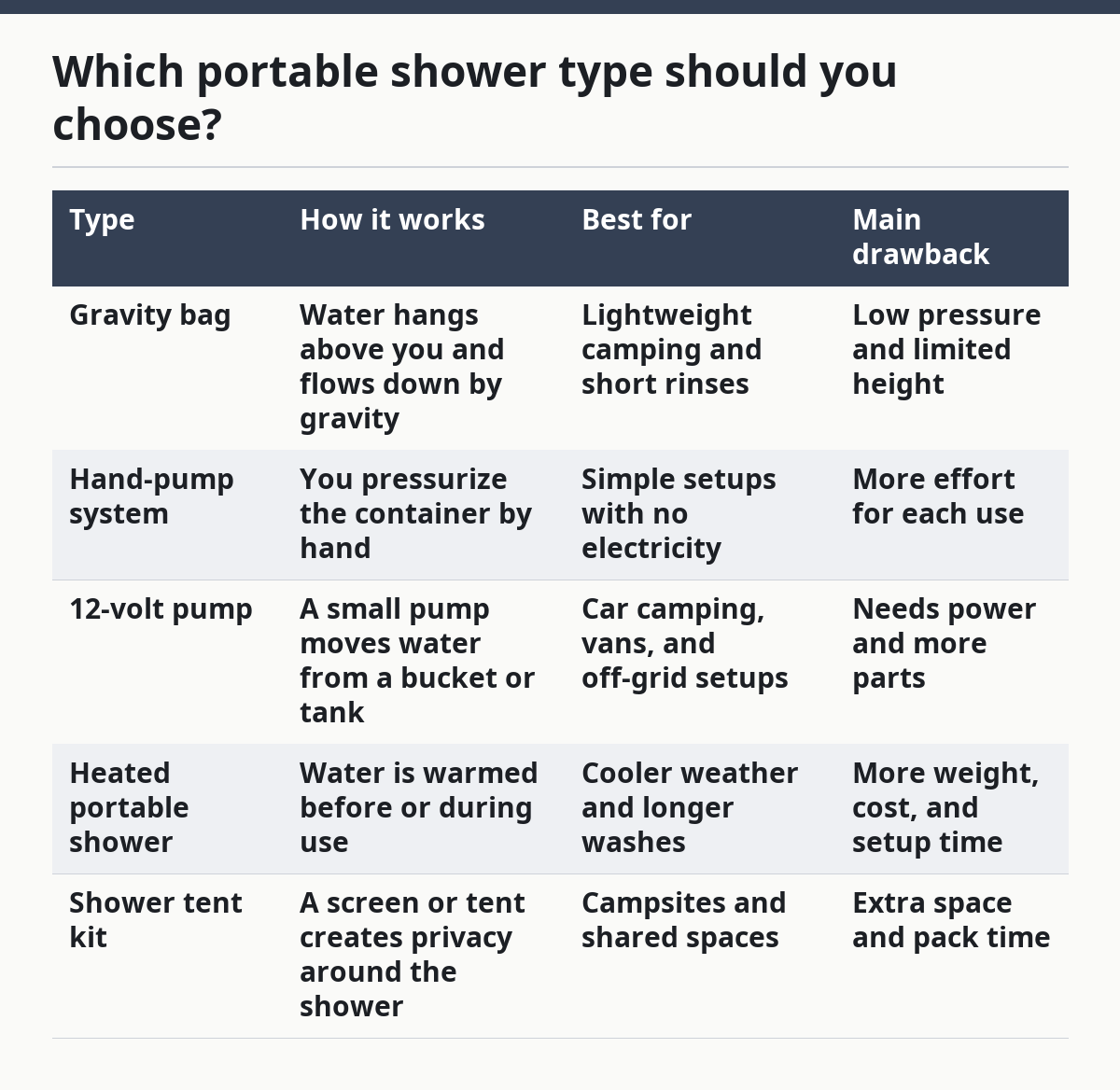
A gravity bag is the easiest place to start if you only need a rinse and you can hang the bag high enough. It is not great for strong water flow. A 12-volt pump is the better choice if you want a steadier spray and already have a vehicle battery or portable power source.
Heated systems deserve caution in a practical sense, not a dramatic one. If you only need a quick summer rinse, a heater may be unnecessary weight. If you use cold water in early spring or late fall, a cold-only shower can be miserable, even if it looks good on paper.
The wrong choice is usually the one that ignores your real use case. A solo camper who showers once every few days does not need the same setup as a family cleaning up after a beach day. A shower tent with a pump may be too much for one person and too little for four.
How do you set up a portable shower?

You set up a Portable Ahower by filling the water source, connecting the hose and shower head, placing the drain area, and testing flow before you get wet. The basic process is short, but the order matters if you want enough pressure and a dry floor.
-
Put the water source on stable ground or hang it at the right height.
A 5-gallon bucket, water bag, or tank should sit where it will not tip. A gravity setup needs elevation, while a pump setup needs a solid base. -
Connect the hose, shower head, and pump if there is one.
Tight fittings reduce leaks and weak spray. A loose hose can waste water fast, which is a problem when the whole supply is only 5 gallons. -
Warm the water if your model allows it.
Some users mix hot and cold water in a bucket before connecting the system. That gives a more comfortable rinse without changing the hardware. -
Place a mat, tray, or drain plan under the shower area.
Water on bare ground can turn into mud, and water inside a van or tent can become a mess in minutes. -
Test the spray for 10 to 20 seconds before use.
This shows whether the flow is too weak, too hot, or angled wrong. A short test saves water and avoids a cold surprise mid-shower. -
Shower in short stages.
Wet down, turn off the flow if the system allows it, soap up, then rinse. That rhythm stretches a limited tank and makes a 5-gallon setup far more usable. -
Drain and dry the parts after use.
Empty leftover water, shake out the hose, and let the head dry before storage. That cuts odor and keeps the next setup cleaner.
The core idea is simple: use gravity or a pump to move water, then manage the water like a scarce supply. If the tank empties in the first minute, the problem is usually flow control, not the shower head itself.
What matters most before you buy one?
The most important buying factors are water capacity, power source, hose length, and privacy setup. Those four details decide whether the shower is convenient or annoying.
A 5-gallon reservoir is fine for brief rinses, but it is not generous if two people need a full wash. A larger tank gives more comfort but adds weight and bulk. If you carry the setup by hand, that weight matters more than the product photo suggests.
Power source is the next big decision. A gravity bag needs no electricity. A 12-volt pump can give better flow, but it ties the shower to a battery, vehicle, or other power supply. If you are planning a remote site with no power at all, a battery-dependent system can become a weak choice unless you already have a power plan.
Hose length sounds minor, then becomes a daily annoyance. Too short, and the shower head never reaches the right height. Too long, and the hose gets in the way, drags on the ground, or takes longer to drain.
Privacy matters too. A shower tent, curtain, or enclosed corner is not just about comfort. It also keeps splashes off gear and makes the setup easier to use when other people are nearby. If you only plan to rinse off outside near a vehicle, you may not need a tent. If you are on a shared campsite, you probably do.
Price varies by type, but the real cost is often the total setup, not the shower unit alone. A cheap shower bag can still need a hose, hook, towel, mat, and some way to store the water. For that reason, a low sticker price may not reflect the total cost.
What are the most common mistakes?
The most common mistakes are using too little water, ignoring drainage, and choosing the wrong water temperature. Each one costs comfort, time, or cleanup.
Using too little water is the easiest mistake to make with a Portable Ahower. If the setup only holds a small amount, the user often starts rinsing before the body is ready to be soaped. That leaves soap in the hair, cold spots on the skin, and the need to stop early. The better move is to plan the shower in short steps and use a spray pattern that does not waste water.
Ignoring drainage can ruin the whole setup. A shower that works fine on dry ground can become a slippery, muddy mess if runoff has nowhere to go. In a van, tent, or enclosed area, poor drainage can also leave standing water and damp gear. The fix is to plan a ground mat, drain tray, or outdoor runoff path before the first rinse.
Choosing water that is too hot or too cold is another avoidable problem. A bucket that feels warm at the start can cool off quickly in outdoor air. In cold weather, that matters even more because a short shower can become uncomfortable before it is finished. The practical fix is to test the water first and assume that outdoor conditions will change the feel of the water fast.
A final mistake is buying for the wrong environment. A compact bag shower is fine for a solo hiker, but it is a poor fit for family use. A heavier pump setup may be right for car camping, but pointless for someone who packs by hand. The wrong setup usually fails because it solves the wrong problem.
Who is a portable shower not for?
A Portable Ahower is not for someone who wants daily home-style comfort with no setup work. If you want strong, endless hot water and a tiled floor, a portable system will feel like a compromise every time.
It is also not ideal for users who hate setup and cleanup. Even a simple 5-gallon bucket shower needs filling, carrying, drying, and storing. That may sound small on paper, but it becomes a real task after repeated use. Because of that, repeated filling and cleanup can matter as much as the shower itself.
People who need full privacy, strong indoor drainage, or hot water on demand should look at fixed plumbing instead. A Portable Ahower can do a lot, but it cannot turn a campsite into a bathroom. The gap between the two is the whole point of the product.
What should you check before the first use?
You should check the water path, the pressure, and the ground setup before the first full shower. A 2-minute test can save a lot of cleanup later.
Look for leaks at the hose joints and the shower head. Check whether the water reaches the height you need. If the spray is weak, the issue may be the fill level, pump power, or hose angle rather than the shower itself.
If your setup uses stored water, make sure the container is clean and capped when not in use. That matters because standing water left in a warm place can become unpleasant fast. For stored water hygiene and general sanitation, the CDC’s Legionella prevention guidance is a useful reference point, even for simple portable setups.
The last check is practical: can you move the whole system after use without spilling it? If the answer is no, the shower may be too awkward for the space you plan to use. A Portable Ahower should save time, not create another chore.
What does a portable shower need to work well?
A Portable Ahower needs a stable water source, a way to move that water, and a drain plan that fits the space. Without those three parts, the shower is just a hose and a hope.
For many users, the simplest workable setup is a 5-gallon container, a 12-volt pump, and a basic shower head. That is enough for short rinses, gear washing, or campsite cleanup. For longer or colder uses, a heater, tent, or larger reservoir may be worth the extra bulk.
So the best Portable Ahower is the one that fits the way you actually live. If you need speed, keep it simple. If you need comfort, privacy, or warm water, accept the extra parts and the extra setup time.
FAQ
Is a portable shower the same as a camp shower?
A Portable Ahower and a camp shower are often the same thing in practice, but the term “portable shower” is broader. It can mean a bag, a bucket system, a pump setup, or a tented wash area. A camp shower usually implies outdoor use, while Portable Ahower can also cover van life, cabins, and temporary wash stations.
Can a portable shower use hot water?
Yes, many Portable Ahower setups can use warm or hot water if the container and hose are designed for it. The exact method depends on the model, because some systems are built for cold water only. Check the material limits before pouring in very hot water.
How much water does a portable shower use?
A Portable Ahower uses only as much water as the container holds and the flow setting allows. A 5-gallon bucket gives a limited wash, so short rinse-and-soap steps usually work better than a long, open spray. Water control matters more than the exact device.
Do I need a shower tent?
No, you do not always need a shower tent, but it helps when privacy or splash control matters. A tent is useful at campsites, shared spaces, and places where runoff would hit gear or people nearby. If you are rinsing off in a private outdoor area, a tent may be optional.
Drafted with AI; not yet reviewed by a person.
Leave a Reply